

Festival Daily – Thursday
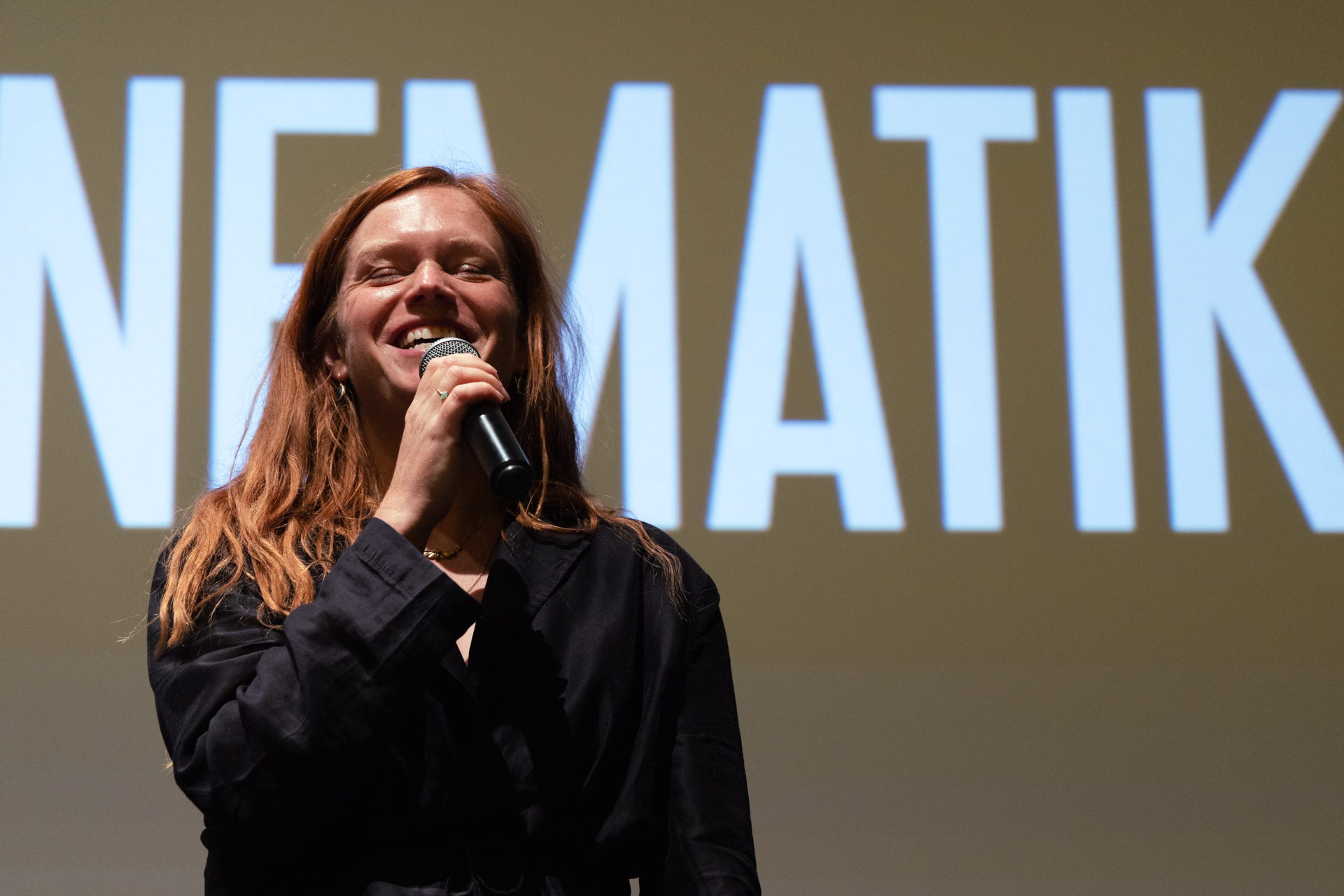
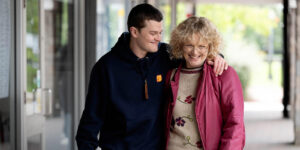
Last year, Ester Geislerová sat on the jury of one of the festival's competitive sections. This time, she has brought her very personal film A Pint of Pink to Piešťany.
Don't miss out!
13:30 | Du | The Beloved
A festival novelty starring Javier Bardem.
17:00 | Fon | We Have To Survive
The new Slovak documentary will be personally introduced by its director, Tomáš Krupa.
19:30 | Fon | Yellow Letters
Derya and Aziz are among acclaimed theatre artists. Everything changes fundamentally at the premiere of their new production.
17:00 | CL | Baláž & Hubinák
Rádio_FM presenters with their guests – publicist Juraj Malíček, journalist Samo Marec, and Cinematik executive director Tomáš Klenovský.
23:00 | Fon | SaccharinE
First-year medical student Hana starts losing weight after an inspiring meeting. New circumstances draw her into a disturbing world of obsession with physical appearance.
Tips of the day
The Voice of Hind Rajab
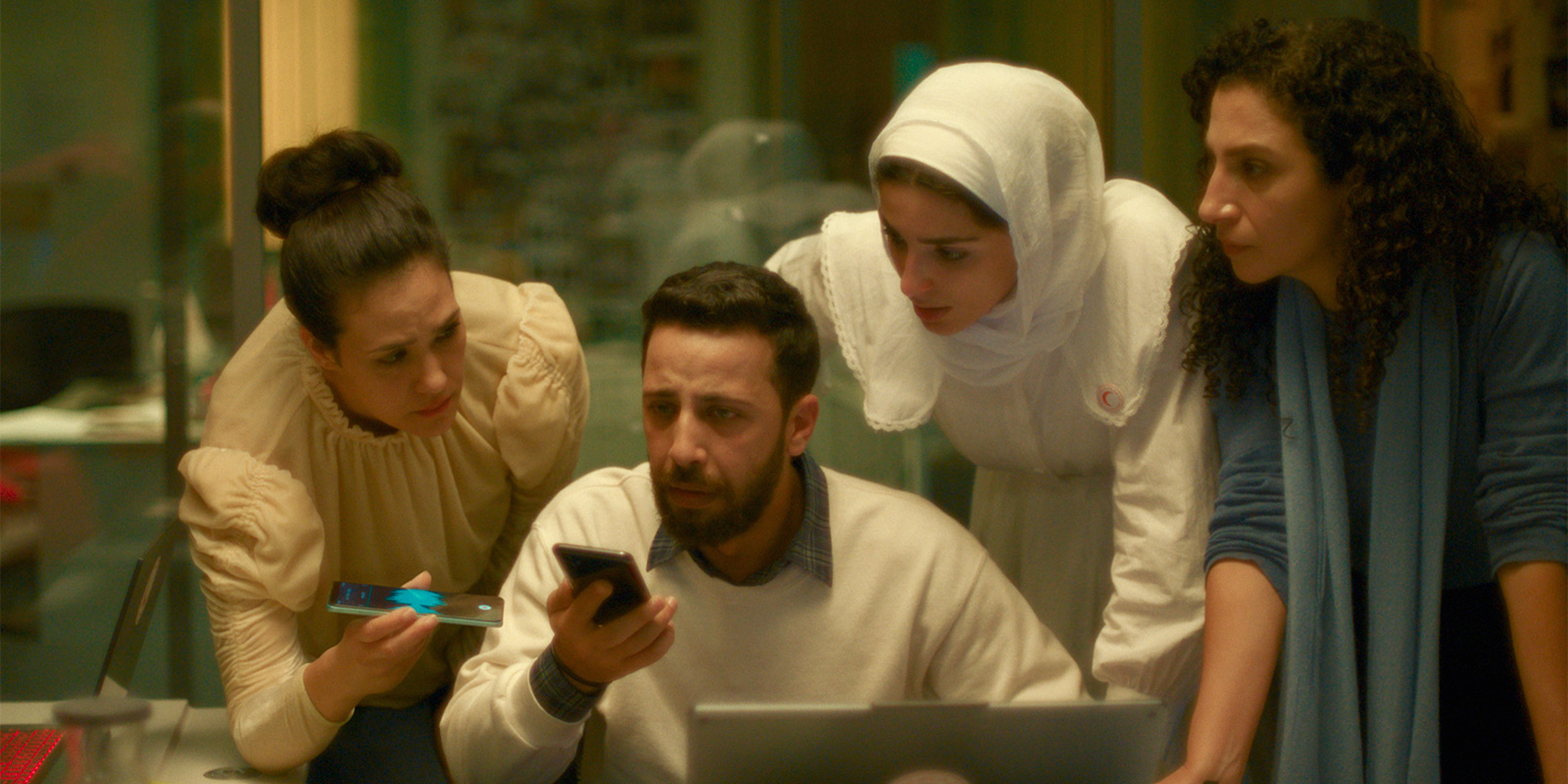
16:00 | Art | Some cinematic works do not require exaggerated inventiveness in fictional narrative or dramaturgical calculations. Their power lies in the pure, exposed duty to bear witness. The Voice of Hind Rajab it approaches the true story of a six-year-old girl from Gaza with a deep ethical responsibility and extraordinary directorial humility. At the core of the entire film is an authentic emergency call recording – fragile, trembling, and yet overwhelmingly tangible. Sound here is not merely an accompaniment to the visual, but a monument in its own right to human vulnerability. The filmmakers, led by Tunisian director Kaouther Ben Hania, do not aesthetise the tragedy, nor do they attempt to handle the painful material through cheap sensationalism. Instead, the film creates a space in the cinema for silent yet relentless listening. Through a perceptive and sensitive dosing of the visual accompaniment, the directorial approach gives full weight to every word and every second of silence on the other end of the line. The Voice of Hind Rajab It is a work of extraordinary human and artistic dignity. It offers no easy answers or false consolation, yet it stands as a distinctive act of collective memory. In the festival programme, it represents a cinematic experience that demands not only the viewer's attention, but above all deep empathy and silent respect.
Matej Ambroš
Home Sweet Home
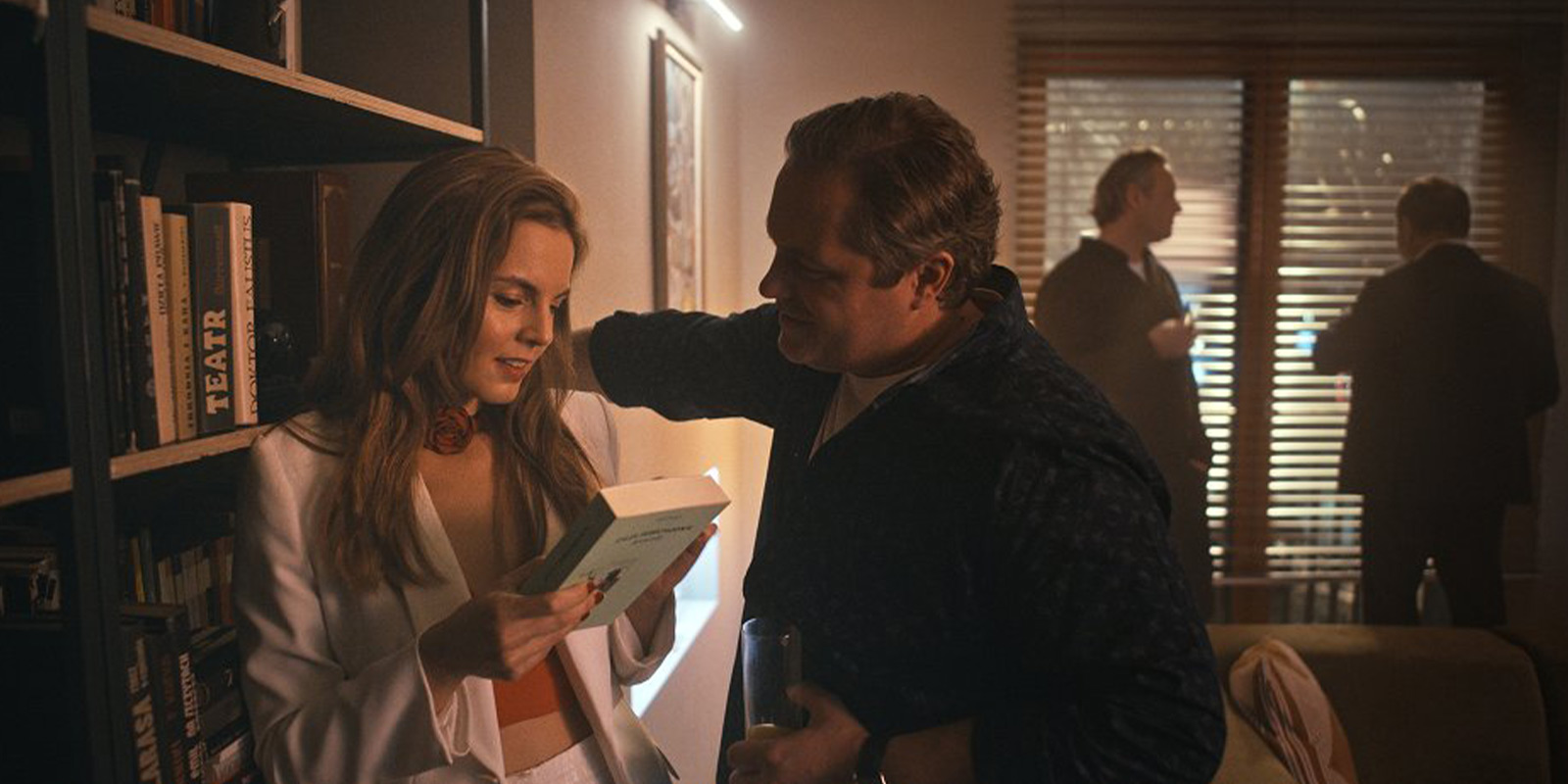
20:00 | Spa | Home Sweet Home director Wojciech Smarzowski's film is the story of Gośka, who cannot believe her luck at finally meeting the „man of her dreams“. However, the family idyll is replaced by a tragedy that reveals not only Grzesiek's violent nature, but also the fact that „seemingly orderly family life“ is merely a mundane illusion. The brutality encountered in Smarzowski's film is extreme, presenting the theme of domestic violence, abuse and the impacts of lifelong trauma in unvarnished realities that may evoke in the viewer the feeling of a festering wound that refuses to heal. Yet, when dealing with themes such as domestic violence against women, the form chosen by Smarzowski, into which he has poured the story of Gośka and her young daughter, is the only one in which these horrors should be presented to the viewer. Directly and without any detours. Only then can even a less empathetic person understand the horrors in which many women and their children currently find themselves, even within their own homes. Home Sweet Home and, also due to the importance of the topic, it is becoming one of the most important films of this year's Cinematik.
Zuzana Kožaková
Ulya
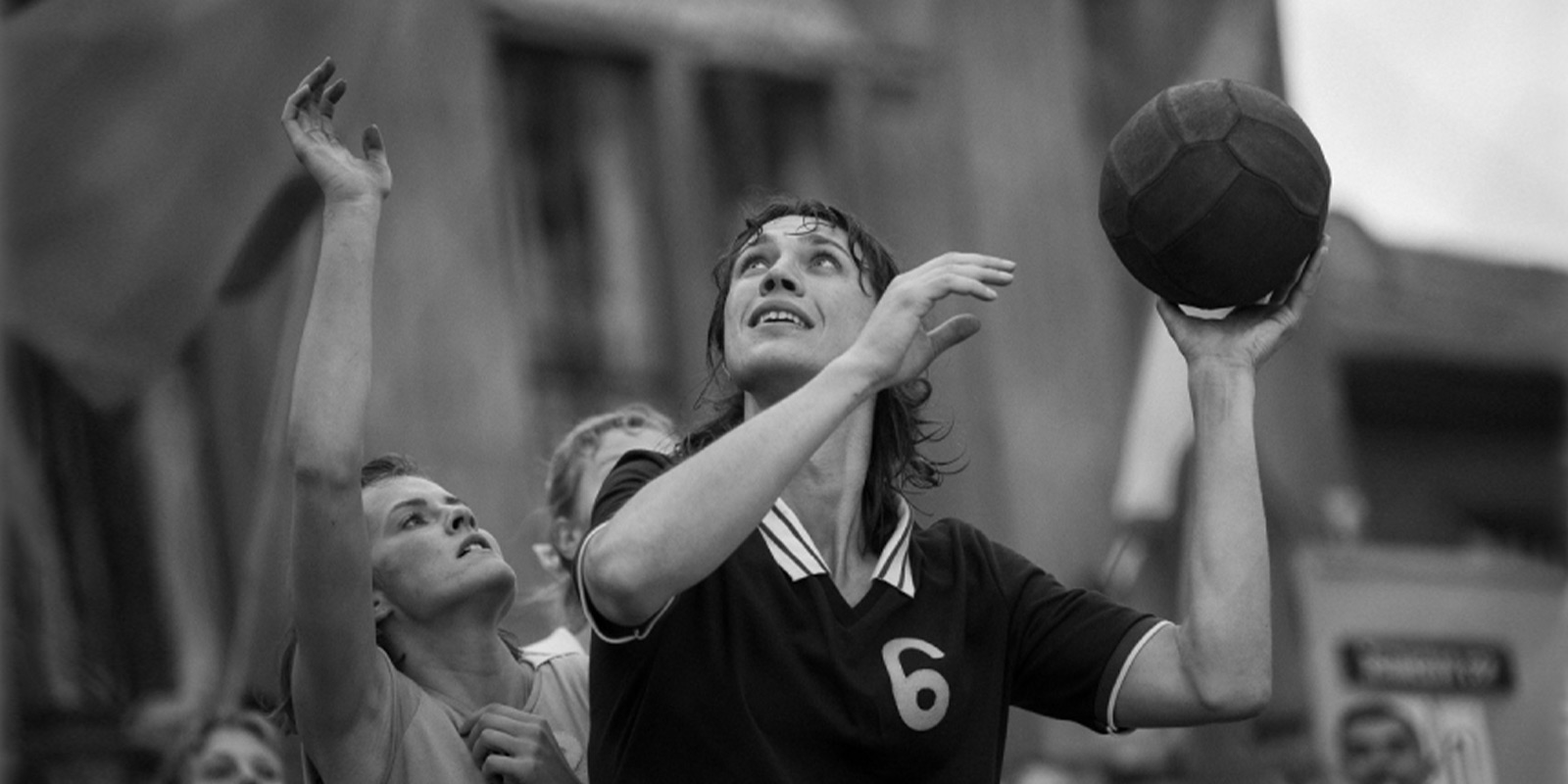
17:00 | Spa | Film Ulya It is inspired by the life of the legendary Latvian basketball player Uļjana Semjonova. Ulya is a teenager from an Old Believer community who is nearly two metres tall. She lives on a remote farm, and her unusual height sets her apart from others. When her class photograph reaches basketball coaches, she is taken to Riga to become part of a famous basketball team. Ulya She struggles internally with her identity and the question of whether to hide because of her appearance or to use her exceptional potential. She tries to come to terms with a world that perceives her primarily through her height. What sets her apart from others gradually becomes both her burden and her strength, even though it does not fulfil her desire for an ordinary life. The journey from a remote farm to Riga is at the same time a journey from a closed world into an environment where her uniqueness transforms into talent while also bringing the expectations of others. The black-and-white imagery transports us back to 1964, whilst also highlighting the contrasts upon which the film is built – between solitude and public life, uncertainty and exceptionality, or the desire to fit in and the impossibility of remaining unnoticed.
Mária Nikelová
Review
I Swear
Actor Robert Aramayo portrays a young man with Tourette's syndrome in the film. This is a neuropsychiatric condition characterised by uncontrolled movements, shouts or other vocal utterances. In some cases, vulgarities or socially inappropriate remarks may also be repeated, which is by no means intentional behaviour. A person with this syndrome simply cannot consciously control them. Tourette's syndrome is a congenital and lifelong condition. It begins to manifest between the fourth and seventh years of life, with the intensity of symptoms being most pronounced during puberty. Despite the fact that this is a relatively well-known diagnosis, the public often perceives it in an overly simplistic way. It is associated mainly with uncontrollable swearing. However, the reality is much more complex, which the film I swear, for this I can't managed to capture it sensitively. The film's narrative tells the true story of activist John Davidson. However, this is not the first time he has made it to the screen. Back in 1989, the BBC broadcast a documentary lasting around half an hour John’s Not Mad, which drew attention to the life of a young man with Tourette's syndrome at a time when very little was known about this diagnosis. It was this very documentary that etched itself into the memory of director and screenwriter Kirk Jones, who decided to bring Davidson's story to the silver screen. Robert Aramayo portrays the main character with extraordinary conviction, especially through his facial expressions, vocal delivery, and gestures. He has his own distinct and unique charm. He sensitively balances comedic moments with difficult, complicated situations. At times he is so convincing that more than one viewer might wonder whether the actor himself also suffers from the syndrome in question. Before filming began, the Yorkshire-born actor diligently studied comprehensive background material on this diagnosis, which ultimately paid off for him, the film, and the viewers alike. With his performance, he brought a minimalist production into the spotlight of the film world. The film's title itself is also aptly chosen. In the original, it is titled I Swear, which conceals an ambiguous meaning – it can mean „I swear“, but also „I curse“ (or "I swear" profanely). The Slovak distribution title leans more towards the semantic level (and at the same time also evokes an apology). The film gradually brings closer to the viewer how a person with Tourette's syndrome experiences everyday life. In many moments it feels almost like an awareness campaign. Although the storytelling pace is at times slower, the final minutes restore the film's original power. I swear, for this I can't reminds us that despite the progress being made in embracing differences, it is still not enough. We still do not understand neurodiversity well enough. Society still has a long way to go. Although the film feels overly didactic at times, given the persistently low awareness of Tourette's syndrome, this does not feel disruptive. The film is an important step in the right direction. See for yourself. You will likely leave the cinema a little more perceptive and empathetic.
Barbora Gvozdjáková
20:30 | Kin | I Swear
Interview
Tomáš Krupa
When did you first start thinking about the theme of your new film?
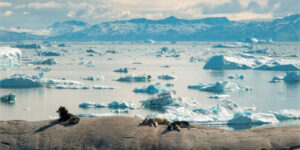
In the previous film Good death Through the topic of assisted dying, I explored the question of ultimate freedom – the decision over one's own end. In my next project, I wanted to look at the opposite pole, the desire to live at any cost. Seven years ago, the world looked different – it was before the COVID pandemic, before Russia's aggressive invasion of Ukraine, before Donald Trump's presidential victory and before the outbreak of the conflict in the Middle East. At that time, news headlines were largely filled with climate change and the problems associated with it. It was a period following the conclusion of the Paris Climate Agreement, and it was clear that we were facing the biggest problem of our time; it seemed that the Western world would unite to solve it. I wanted to be part of something big and important, I felt a responsibility to do something, but I am not a climate expert or a scientist – as a filmmaker I could only do one thing: make a film about it. I am not an environmentalist or a climatologist, I am a film director. The only thing that made sense to me was to offer a different perspective. Nobody needs any more news about the end of the world coming.
Do you ever experience climate anxiety?
I think that is how it started. From all the articles, reports and books on the subject, I was sinking into deeper and deeper scepticism and standing on the edge of an abyss regarding my vision of our future. It was a bleak outlook, and moreover, the public discussion about it was immensely disheartening. I asked myself what I could contribute. I am not an environmentalist or a climatologist, I am a film director. The only thing that made sense to me was to offer a different perspective. Nobody needs any more reports about the end of the world approaching. At the same time, however, I did not want to trivialise the subject or look for something positive at all costs – there is nothing positive about the climate crisis. It is here, it is not going anywhere and it will not wait for us to solve other problems. This summer, when we experienced record temperatures and drought throughout Europe, including back home, and dried-up riverbeds not seen for centuries, it reminded us of this once again
Do you think we can stop the current trajectory of our planet (and society)?
I would like to believe it, but much points to the fact that in recent years a key trait of our civilisation has weakened – one that, among all homo species, destined us to survive and cope with all changes: the ability and willingness to cooperate in large numbers. Since the time of Covid and the boom in social media, by contrast, the problem of distrust has deepened, facts are increasingly being relativised and scientific knowledge rejected, and faith in the truth is being lost because everything is relativised and distorted while we condemn and drift away from one another. I think this has become our biggest problem and a turnaround must happen, yet even the geopolitical setup of the world does not help matters. The president of the wealthiest and largest country in the world is dividing his own nation and creating conflicts among his allies. But every election is a chance to stop a bad trend and oust those who harm peace, prosperity and common sense. If it turns out we have handed power into the wrong hands, we have the opportunity to take it back from them and give it to someone who deserves it more. Yet it is increasingly difficult to distinguish who means it and who is just chasing political points based on what is currently in fashion. We are certainly lacking visionary leaders in the world. Donald Trump offers no vision of the future; he offers only business and nationalism, which has no answers to global problems or climate change – and to claim it does not exist is madness. Today, everyone in the world can experience a change in the weather so rapid and extreme that it can no longer be denied that nothing is happening. Yet the planet does not need us – it will manage without us just as it did millions of years ago. We, however, need the planet.
Barbora Gvozdjáková
17:00 | Fon | We Have To Survive
Review
33 Steps
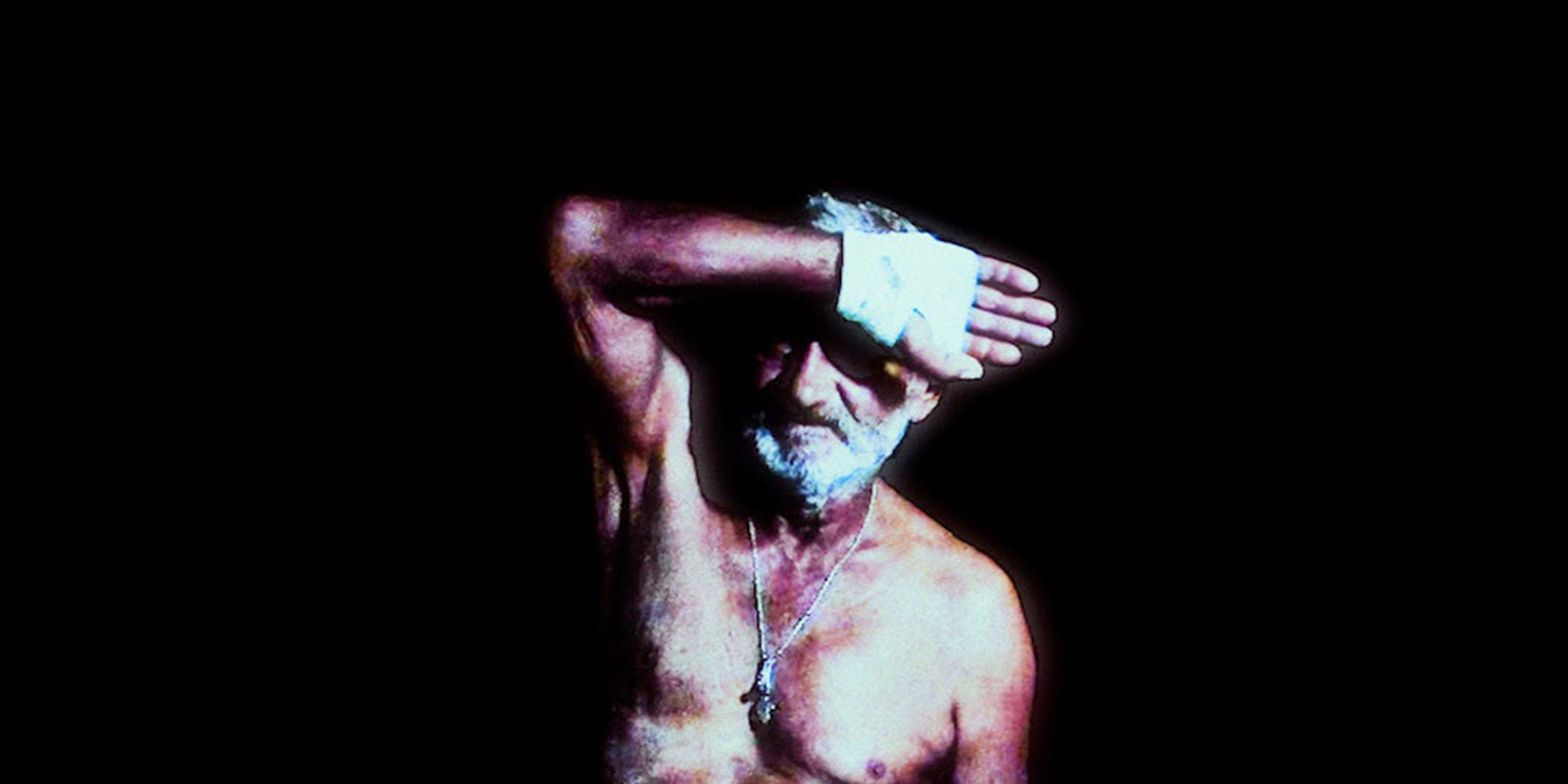
11:00 | Fon | The feature film by Anna and Šimon Domček, inspired by true events, is based on Domček’s bachelor documentary about Milan, a Roma man who was attacked as a teenager by a group of skinheads, including his classmate Erik. A decade after surviving a clinical death, Milan discovers that Erik is soon to be released from prison. The past thus resurfaces with renewed intensity, and the trauma gradually spills over onto Milan’s nearest and dearest. On a small scale, the film thoughtfully develops the motif of fear and violence in its mental, symbolic and physical (and therefore potentially easier to eliminate) form. The strongly stylised auteur storytelling is punchy, maintaining both tension and a clear narrative line, at the centre of which lies Milan’s struggle between a desire for revenge, intertwined with a vision of securing protection for his family. The casting of non-actors portrayed by real-life figures intensifies the fragile tension between fiction and reality, delivering a story about the difficult confrontation with the past and events that can repeat themselves anywhere, at any time.
Žofia Ščurková