

Festival Daily – Tuesday
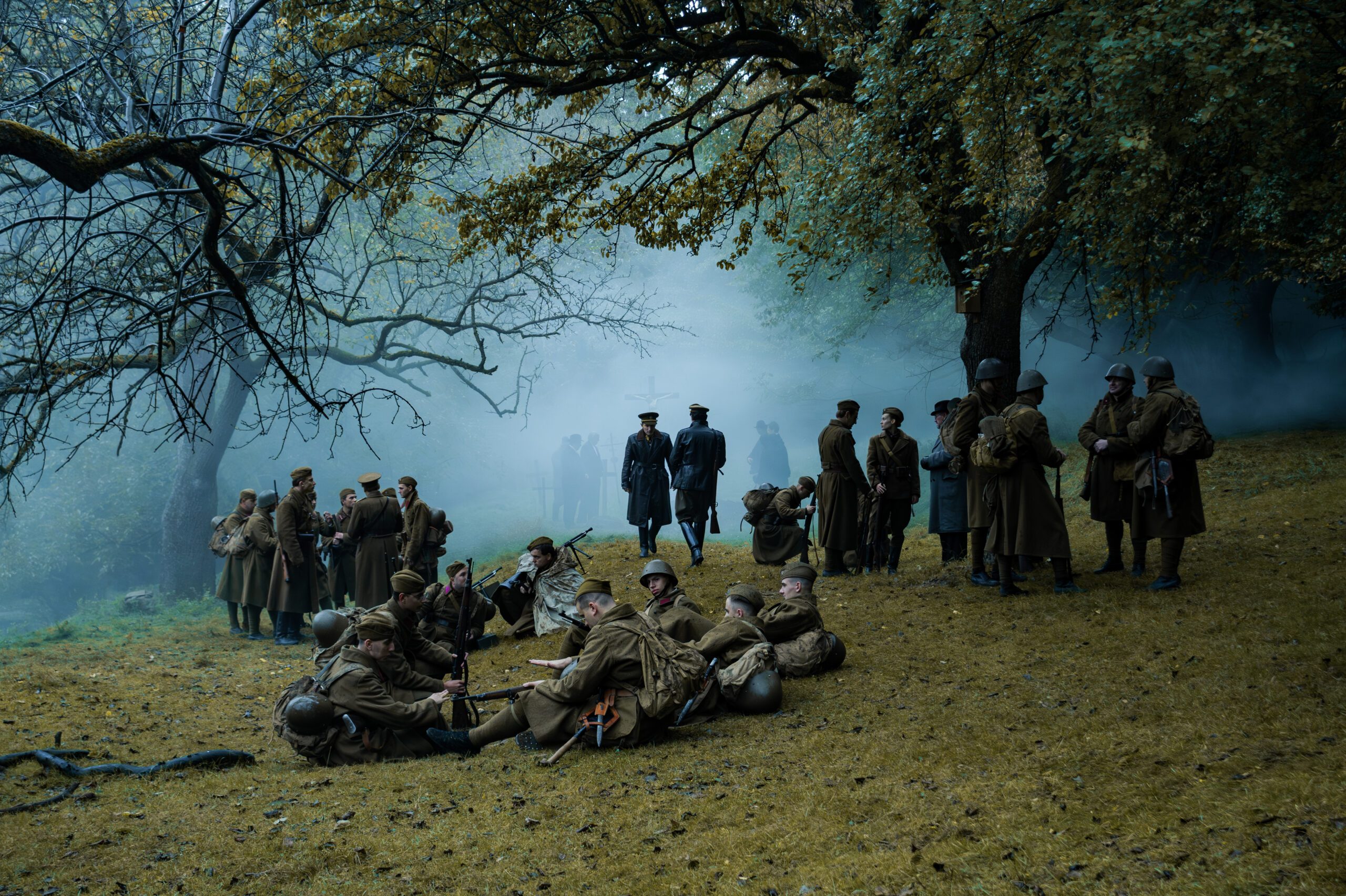
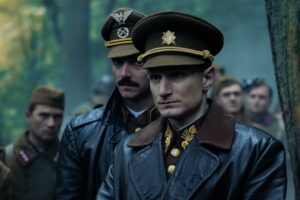
The twenty-first edition of Cinematik opens with the world premiere of the new Slovak film General Golian, directed by Juraj Štepka.
Don't miss out!
14:00 | Fon | The Quiet Ones
The film follows a group of exceptionally resilient, ambitious and uncompromising robbers who are united by a common goal.
16:00 | Art | Best of AZYL SHORTS 2025 – Short Films
AZYL SHORTS brings to Cinematik an hourly selection of the best 1-minute and 5-minute films and music videos from the previous year's festival.
19:00 | Du | Grand opening
We are opening the festival with the story of General Golian, with the participation of distinguished guests. Definitely do not miss it!
20:30 | Kk | Copenhagen Does Not Exist
A young woman vanished without a trace. Three months later, her boyfriend agrees to an unusual arrangement: he allows himself to be locked in a flat and subjected to interrogation by her father.
23:00 | Fon | Coming Home in the Dark
A family outing turns into a nightmare when teacher Alan, his wife Jill, and sons Maika and Jordon take a car trip to a remote New Zealand coast.
Tips of the day
Dry leaf
13:30 | Du | Alexander Koberidze's film tells the story of a father who sets off to find his daughter after she leaves home and leaves her parents a farewell letter. Lisa is a photographer who planned to map football pitches in the Georgian countryside. This very piece of information becomes the father's only clue and at the same time the impetus for a journey across the country. The search thus turns into a road movie in the form of a poetic study of the environment, in which the search for a person is simultaneously a search for places, images and possible memories. Dry leaf despite its longer run time and slow pace, it is remarkably playful. It is self-reflective, experimenting with both visual form and narrative structure. The noisy, pixelated image rarely reveals anything and instead conceals much more, hiding it in its shadows. As if it refused to offer a clear shape, calling into question the ability of one specific image to encompass or definitively capture a certain place. The search for Lisa thus takes place not only in the space of the Georgian countryside, but also in the uncertainty of images, memories and ideas that we create about individual places. The combination of playful storytelling, poetic observation and a consciously limited cinematic image makes the Of a dry leaf a synonym for a well-spent time at the cinema.
Žofia Ščurková
Colony
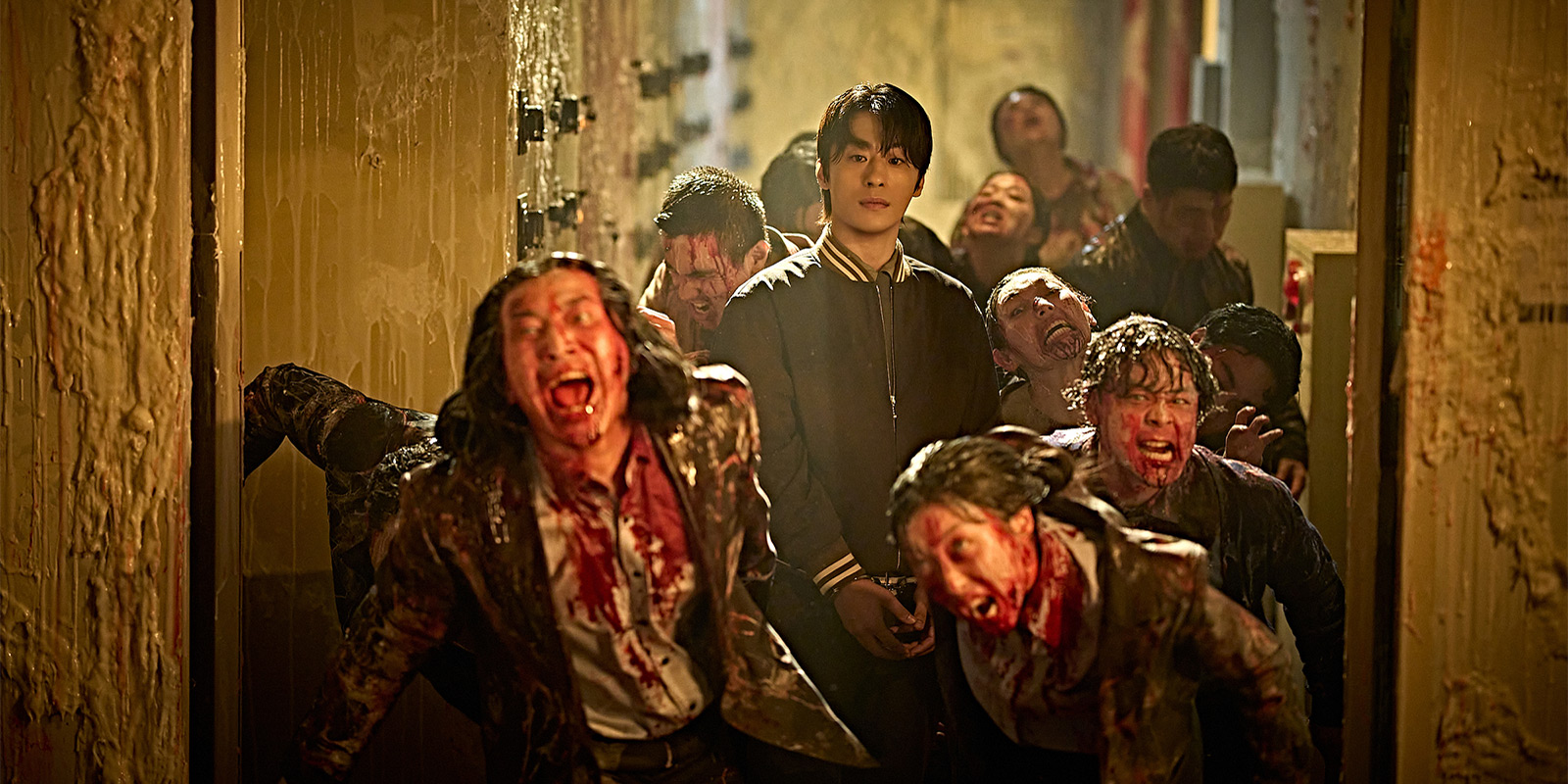
22:30 | Du | Since its inception, the zombie film genre has found effectiveness both in the walking dead and in character psychology and the feeling of claustrophobia. Yeon Sang-ho, creator of the cult Train to Busan (2016), knows this very well. In his Station, he locks us inside the isolated complex of a biotechnology conference, where a failed experiment unleashes a new contagion. Up to that point, the plot sounds fairly standard, but Yeon pulls a trump card from his sleeve: the infected here do not wander aimlessly. They possess a shared consciousness and function as a perfectly synchronised hive. The classic survival trope thus transforms into a cold-blooded game of chess between human rationalism and relentless collective instinct. Suddenly, man's greatest handicap becomes his own individuality. Yeon has no need to wallow in self-serving brutality. Instead of explicit violence, he builds tangible claustrophobia, surgical pacing, and a detailed sound design that tightens the noose with every passing minute. Colony It is a chillingly elegant, confident thriller without an ounce of fat. A great reminder of why Korean genre cinema continues to set the tone where others are running out of breath.
Matej Ambroš
The Invisible Jan Gogola
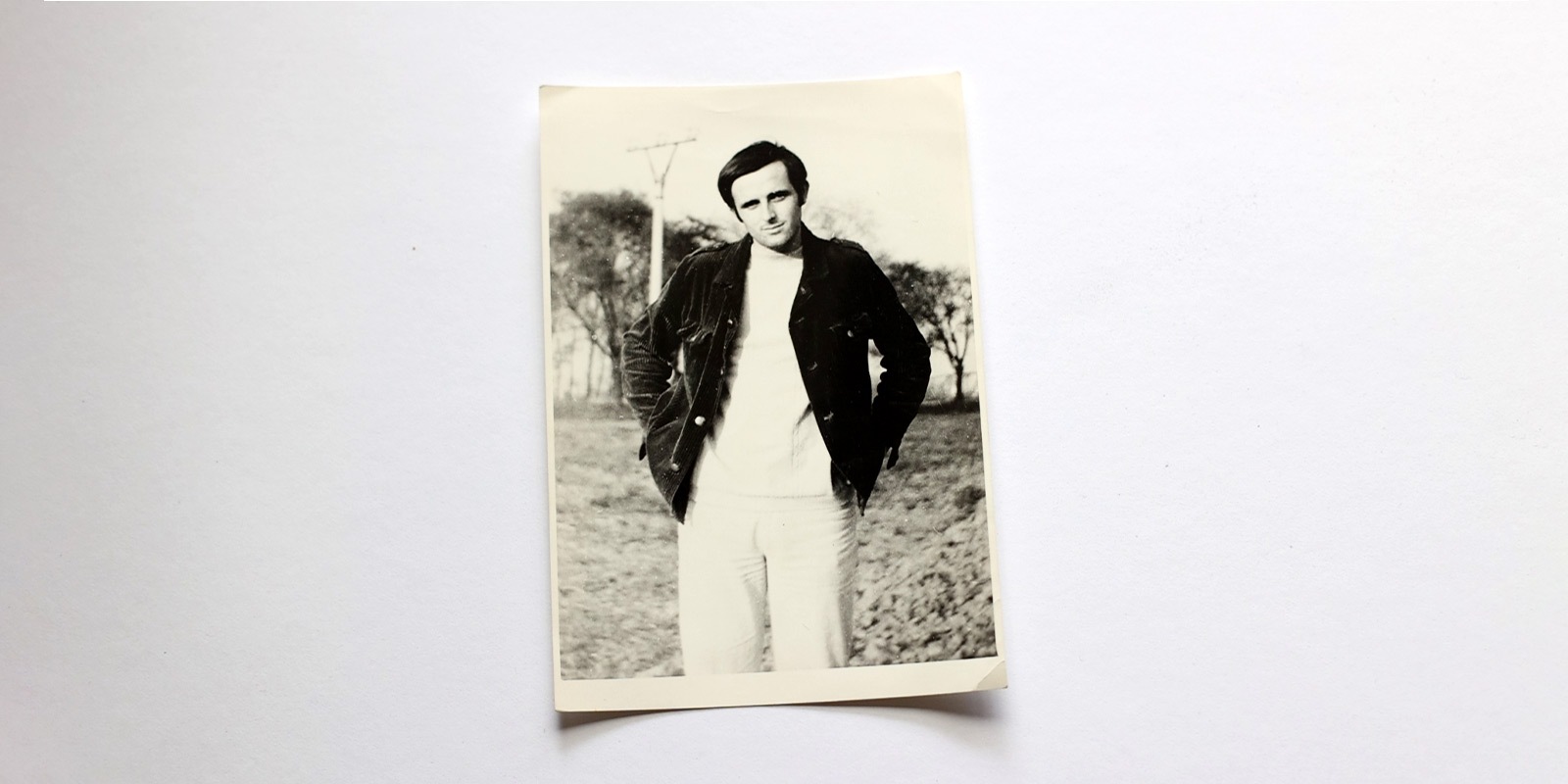
17:00 | Fon | Slovak documentary filmmaking has long been of a very high standard in terms of quality. It travels to festivals and picks up awards. We regularly present new films in Piešťany. The Invisible Jan Gogola is a documentary portrait of the Czech film dramaturg and teacher Jan Gogola Sr., who significantly influenced the form of Czech and Slovak film and nurtured several generations of filmmakers. Directed by Marek Janičík, the film focuses on a profession that often remains hidden from audiences – dramaturgy. Gogola helps filmmakers shape the story, the script and the final shape of the film, yet his name and work remain in the background. The documentary therefore explores what dramaturgy means and what role is played by a person who fundamentally influences a film, even though they are not its visible author. Janičík was Gogola's student, and the film thus also represents a personal encounter between teacher and pupil. It also features prominent figures of Czech and Slovak cinema, such as Bolek Polívka, Juraj Nvota and Juraj Lehotský. At the same time, the film raises questions about authorship, collaboration and responsibility in the creation of a work. It portrays dramaturgy as a creative process that connects individual perspectives and helps a film find a convincing form and meaning that will resonate with generations.
Barbora Gvozdjáková
Interview
Juraj Štepka

The son of renowned Slovak theatre practitioner Stanislav Štepka has directed several films focusing precisely on his father's Radošina Naive Theatre. He also brought the story of the 2019 uprising to the screen. These were primarily television projects. He continues with the theme on the big screen through a drama about a prominent figure in our national history.
Does the fate of General Golian have parallels (consequences) today?
Definitely. And perhaps even too much so. When we started writing the screenplay, we had no idea how relevant it would ultimately be. When making a historical film, one tells oneself that one is talking about the past. And then one wakes up one morning and realises that the past is somehow looking in through the window. History is returning. Sadly, that is also true. Not because the same events are returning, but because people find it very difficult to learn from what they have already lived through. And it is even easier for them to forget those who did the right thing at a decisive moment. History lessons sometimes manage to forget heroes. History itself, however, does not forget them. It remembers them. And it is very important that we start reminding people of them again – especially young people who no longer have personal experience of what it means when freedom begins to slip away. In my view, therefore, Golian's action is not merely a historical event. It is a question that is put to us even today: what will we do when the moment arrives in which it is no longer possible to stand aside? Because the actions of people like Golian are, in fact, our conscience. And conscience has one unpleasant trait – a person may not hear it for a moment, but it knows very well where we live.
Why is our history relativised so often (and so easily)?
That is a difficult question. And right at the start I must say that I am not a historian. I am a filmmaker who ventured into history with great respect, and with this film also with a great deal of humility. However, I think one of the reasons is today's unbelievable ease with which we access information. In the past, if a person wanted to claim something about history, they had to go to the library. They had to find books, records, documents, read, study and above all verify. Today it is enough to type something into a search engine and within a few seconds fifty „true“ answers pop up at us, while half of them do not even know where they actually came from. And then there is another human trait. We love stories that are mysterious, shocking and a bit forbidden. A conspiracy is simply often more interesting than a fact. (abridged)
Barbora Gvozdjáková
19:00 | You | General Golian
Profile
John Carney
John Carney (*1972, Dublin) is an Irish film director, screenwriter, producer, composer and musician whose work is heavily dedicated to the intertwining of film and music. He began his career with short films and later made a name for himself in television as well. He gained significant attention with the romantic musical drama Once (2007), for which the song „Falling Slowly“ won an Oscar. Among his best known films are also Begin Again (2013), Sing Street (2016) a Flora and Son (2023). Carney is characterised by his sensitive storytelling about people, relationships, dreams and the power of music. His musical numbers do not merely act as an addition to the plot, but often directly express emotions and move the story forward. This is also why he has become one of the prominent contemporary creators of musically themed films. In 2026, he released the comedy Bleeding heart (Power Ballad), which he not only directed, but also co-wrote with Peter McDonald and served as a producer on. Starring Paul Rudd and Nick Jonas, the film tells the story of two musicians brought together by a song and their subsequent struggle for recognition. Bleeding heart This follows on from Carney's long-standing interest in music, human relationships and stories about outsiders.
Barbora Gvozdjáková
20:30 | Kin | Bleeding heart
Review

The Father, the Sons and the Holy Spirit
This Danish time-lapse documentary follows brothers Henrik and Christian against the backdrop of their long-standing strained family relationships. The underlying conflict stems from their attempt to contest the will of their wealthy grandfather, who omitted them from his last will and testament. However, this dispute, which was initially driven by financial motives, gradually reveals itself to be a symptom of a far more complex family conflict, the roots of which stretch back to the childhoods of both protagonists. The documentary eschews a clear-cut perspective of victim and perpetrator, focusing instead on the mutually destructive dynamics of family relationships. The gradual unravelling of the past allows us to observe the different ways in which the brothers come to terms with their experiences. The film notably explores the mechanism of evading responsibility for one’s own actions and shifting the blame onto external factors – ranging from the automatically expected financial security to the consequences of the unenviable start in life that the brothers’ parents provided for them. A similar principle can also be observed in their relationship with faith, where, rather than mending specific interpersonal relationships, they find it easier to resort to blanket forgiveness from a higher authority. The brothers’ individual story gradually expands to encompass a broader social perspective. The film captures the intergenerational transmission of trauma and the conditions in which the protagonists grew up, to their own children. It touches upon the support mechanisms of the Danish social system and contrasts them with instances of systemic failure. The theme of ultra-nationalism and the far right also enters this social dimension, with the film highlighting socially vulnerable groups and the need for a collective identity as one of the factors that may contribute to the radicalisation of individuals facing difficult life circumstances. Formally, the documentary remains rather unobtrusive in its structure. Its reportage-style nature is complemented by occasional ironic visual commentary, which greatly enhances it; however, other situations, by contrast, seem somewhat less natural, even forced, which weakens the immediacy of the observation. Nevertheless, through a specific family story, it succeeds in raising universal questions about social determination, responsibility for one’s own life trajectory, and the possibility of breaking intergenerational patterns of behaviour.
Žofia Ščurková
17:30 | Kk | The Father, the Sons and the Holy Spirit