

The main competition of the Cinematik International Film Festival, Meeting Point Europe, will present a selection of the most striking European films of the past year in its 21st edition. Ten titles will offer a diverse collection of auteur cinema, ranging from intimate family dramas to socially and politically urgent works, as well as experimental film forms and documentary hybrids. Piešťany will play host to films that have made an impact at the world's most prominent festivals – from Cannes and the Berlinale to Sundance and Venice.
„Meeting Point Europe is an annual attempt to capture European cinema in its most up-to-date form. This year too, the international jury searched for films that are not only perfectly crafted cinematic works, but also bring a strong directorial vision and themes that can resonate even outside the cinema hall.,“says Peter Konečný, a member of the Febiofest film festival programming team.„This year's top ten is exceptionally diverse – ranging from a film about Marianne Faithfull and the story of Thomas Mann and his daughter to a drama about a family confronted with differing ideas on child-rearing. The common denominator, however, is a strong directorial personality and an effort to look at the contemporary world from an unexpected angle.“
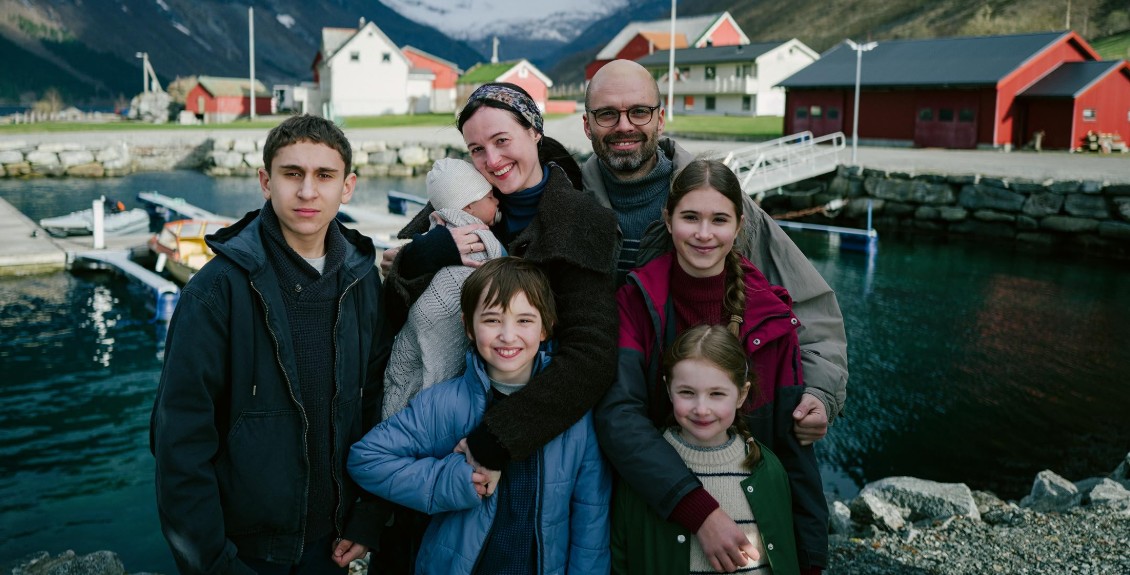
A major crowd-pulling festival attraction in the competition is the social drama Fjord (2026) by the Romanian director Cristian Mungiu. The author of the film 4 months, 3 weeks and 2 days having returned to the main Cannes competition after nearly twenty years and won his second Palme d'Or. His first film shot in a language other than Romanian tells the story of a Romanian-Norwegian family that moves to a remote Norwegian village. When bruises appear on their daughter's body, the peaceful community begins to question the way the parents are bringing up their children. Mungiu creates an exceptionally well-thought-out drama about cultural differences, parenting, social norms, and the boundaries of what we consider right.
Cannes was also a key stop for Fatherland (2026) by director Paweł Pawlikowski. Director of the films Ida or Cold War he won the best director award for his new film. At the centre of the story are the writer Thomas Mann and his daughter Erika, who in 1949 embark on a journey across war-torn Germany. The journey between the Western and Soviet occupation zones gradually turns into an intimate confrontation between father and daughter, as well as a reflection on identity, exile, guilt and a divided Europe. Pawlikowski once again employs minimalist storytelling, black-and-white visual composition and a fragmentary structure that leaves room for audience interpretation between the individual frames.
A new film by one of contemporary Spain's most prominent directors, Rodrigo Sorogoyen, is also entering the main competition. Beloved (The loved one, 2026). Javier Bardem and Victoria Luengo portray a father and daughter between whom, after years of separation, the possibility of rebuilding their relationship opens up. The father, a filmmaker, offers his daughter the lead role in his new film, and working together becomes an attempt to return to a relationship that was for years marked by his absence. Sorogoyen, director of the films Like beasts or Mother, which were also screened at Cinematik, uses the filmmaking environment to explore family trauma, fatherhood and the need to be loved by the one who once abandoned us. The film had its premiere in the main competition of the Cannes Festival.
A strong female perspective is brought by the British-American drama Queen of the Sea (Queen at Sea, 2026) directed by Lance Hammer. Nearly two decades after his debut Ballast, Hammer returns with an intimate story about a family affected by progressive dementia. Juliette Binoche plays a woman who returns to London to come to terms with her mother's condition and the complicated relationship between herself, her mother and her stepfather. The film raises uncomfortable questions about care, consent, autonomy and the line between protecting a person and interfering in their life. The title won a Silver Bear at the Berlinale and two acting awards for Tom Courtenay and Anna Calder-Marshall.
The British film also tells of a past that refuses to stay in the past Rose of Nevada (Rose of Nevada, 2025) directed by Mark Jenkin. The director of the award-winning film Bait has created a strange, hypnotic combination of social realism, folk horror and science fiction. In an abandoned fishing village, a ship mysteriously appears in the old harbour. The Rose of Nevada, which was lost at sea 30 years ago, has mysteriously returned. For the few who remember the ship, it is a sign that it must put to sea once more. Jenkin filmed on 16 mm film and, through physical visual texture, sound and time loops, creates a world in which the boundaries between memory, reality and myth gradually dissolve.
The hybrid documentary is also saturated with the theme of memory. Broken English (Broken English, 2025), which the duo Iain Forsyth and Jane Pollard dedicated to Marianne Faithfull. The film avoids a classic portrait of a musical icon and, through a combination of archival materials, interviews, staged passages and fiction, attempts to reassemble the image of a woman whose public persona was for decades reduced to her relationship with Mick Jagger. Faithfull also appears in the film in her final musical recording, which she created alongside Nick Cave and Warren Ellis. The original portrait of the artist, who refused to remain merely a legend of the past, premiered in Venice.
Another prominent title is Dry leaf (Khmeli suneli, 2025) Georgian director Aleksandre Koberidze, one of the most distinctive contemporary authors in Georgian cinema. Koberidze’s cinematic world once again engages with the poetics of everyday life, chance, love and the unpredictability of life. His work is able to transform seemingly ordinary situations into a cinematic poem, in which reality blends with fantasy and humour with melancholy. Lisa, a sports photographer, has gone missing. She was last seen photographing village football pitches across Georgia. Lisa’s final wish was that no one should look for her. A low-tech portrait of a post-Soviet country stuck between two worlds, filmed on a 2008 Sony Ericsson phone.
French filmmaker Vincent Garenq presents an extremely urgent drama Abandoned (Surrender, 2026), which returns to the case of teacher Samuel Paty, murdered in 2020 following a school discussion on freedom of expression. The film follows the final days before the tragedy and gradually reconstructs the mechanism by which a lie spreads through social media, public outrage and the silence of those around. Garenq focuses not only on the crime itself, but above all on the question of how a seemingly banal untruth can escalate into a disaster and what role collective passivity plays in it. The film was screened out of competition in Cannes.
Radu Jude, the Romanian director, provocatively returns to literary classics in the film Diary of a Chambermaid (Diary of a Chambermaid, 2026). Although the title refers to Octave Mirbeau's novel, Jude does not create a classical adaptation. Its heroine is a young Romanian woman living in France who works as a maid in the household of a French family while also participating in a theatre project based on Mirbeau's work. By day, she cares for Louen, the son of her employers, while her own daughter is growing up in Romania. Jude thus once again connects social satire, historical layers and the contemporary reality of migration. The film was screened in the Quinzaine des cinéastes section at the Cannes Film Festival.
A documentary completes the competition top ten Hug the mountain (To Hold a Mountain, 2026) by directorial duo Petar Glomazić and Biljana Tutorov. In the remote mountains of Montenegro, it follows a mother, Gara, and her daughter, Nada, who live a traditional way of life while defending their native mountain from its planned transformation into a NATO military training ground. This intimate portrait of a mountain community is also a story about memory, generational trauma, humanity's relationship with the landscape, and civil resistance. In the film, the directorial duo combine everyday life with a major political issue, creating a powerful portrait of women who refuse to give up the place they call home. The film had its world premiere in the World Cinema Documentary competition at the Sundance Film Festival.
„Meeting Point Europe is not just a showcase of films that have already won major awards. Our aim is to create a competition that shows where European cinema is currently heading – what themes it addresses, how it tells stories and how it is able to respond to the world around us,“adds Peter Konečný.„This year's selection is exceptionally strong in this respect. It features a Palme d'Or winner, a directing award from Cannes, films awarded in Berlin and Sundance, as well as auteur works that are yet to gain recognition. That is precisely the point of Meeting Point Europe – to bring audiences films that will be the talk of the town. We are bringing nine films from the competition to Slovakia in exclusive premieres.“
The selection of the Meeting Point Europe main competition section is based on a vote by an international jury of film critics and festival programmers who follow the most prominent European festivals and premieres throughout the year. The competition thus offers an annual concentrated look at contemporary European cinema and films that, in many cases, only reach the Slovak audience through festival screenings.
International Film Festival Cinematik will take place from 8th to 13th September 2026. Over six days, it will offer more than a hundred exceptional films, meetings with filmmakers and one of the most comprehensive film programmes in Slovakia.