

Festival Daily – Saturday

Yesterday at the festival, we held the Slovak premiere of the drama Fjord in a completely packed House of Arts.
Don't miss out!
11:30 | Kk | The Prime of Life
A unique opportunity to see Juraj Jakubisko's feature-length debut film on the big screen.
12:30 | CL | Aktuality.sk – Will AI Steal the Soul of Film?
Discussion on the threats of artificial intelligence in the creative industry.
17:00 | CL | The great story called Golian through the eyes of historians
Live recording of the History podcast produced by the SME daily.
19:30 | You | Awards ceremony
Who is collecting the awards this year?
19:00 | Art | Bitter Christmas
Elsa is a successful advertising executive who, following the death of her mother, refuses to slow down and fully cope with her loss.
Tips of the day
Queen at Sea
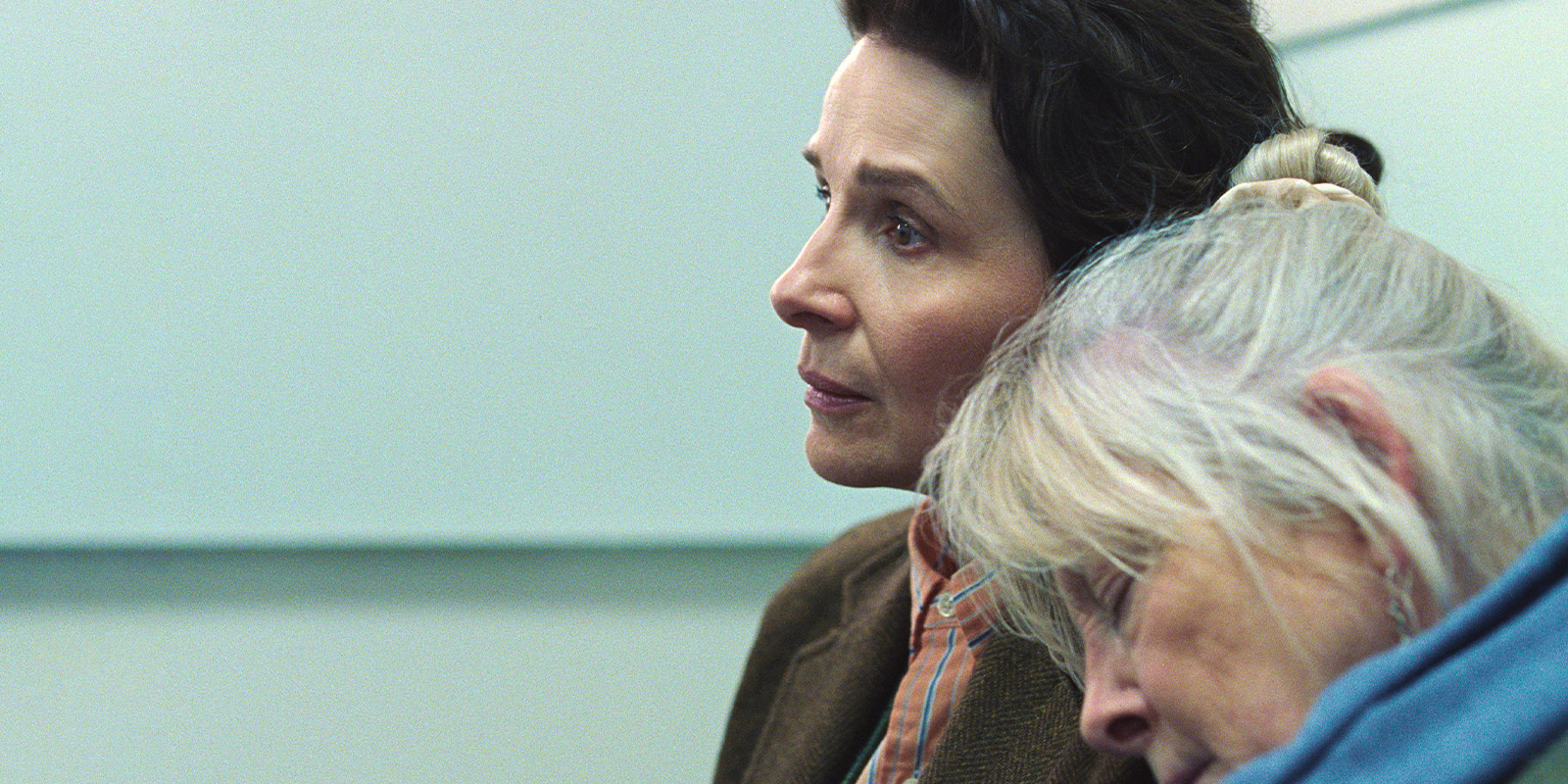
11:00 | Fon | Amanda, played by Juliette Binoche, returns to London with her teenage daughter Sara to care for her mother Leslie, who has advancing dementia. The film focuses on the complicated relationship between daughter, mother and stepfather. It is a moral dilemma exploring where the boundary lies between protecting a vulnerable person and taking away their autonomy. Juliette Binoche does not play Amanda as a clearly right or sympathetic character. Her effort to protect her mother gradually mixes with frustration and the need to take control of a situation that is slipping through her fingers. Since Leslie can no longer always express her needs and feelings in words, a large part of Anna Calder-Marshall's acting relies on facial expressions, gazes, body movement and tiny reactions. A clear part of the storyline is the contrast between the beginning of independence and its gradual loss. Alongside the story of Leslie, whose world is gradually shrinking, the film also follows Sara standing at the beginning of her own independence. Stairs and spaces that could once be navigated without help gradually become a visual image of ageing, helplessness and the loss of independence.
Mária Nikelová
When the tide comes in

20:30 | Kk | A Danish documentary about the small island of Mandø, which is increasingly exposed to rising sea levels and flooding, is a striking portrait of the landscape and its inhabitants. The engaging, compositionally sophisticated shots occasionally approach a visual essay, while allowing the environmental dimension to emerge naturally from the locals' everyday lives. This is intertwined with their past, dreams, the question of whether they might leave the island, and the troubles associated with a declining population curve. At the same time, the film builds on the island's apparent slowness, into which traces of modern life gradually penetrate. It thus captures Mandø in many guises – as a home, a tourist destination, a historic site, and a sanctuary for protected birds all at once. The balanced observation of nature and the interactions of the local population as two inseparable parts of a single place creates a multi-layered and sometimes affectionately humorous picture of an island whose future remains uncertain.
Žofia Ščurková
The Fall of Hercules

20:00 | Phone | In the section Denmark under the microscope also, Christian Bonke's psychological drama will be presented at this year's Cinematik, The Fall of Hercules. The story follows the life of war veteran Youssef, who suffers from post-traumatic stress disorder and is fighting not only against himself, but above all an important battle to preserve his family relationships. Following a violent escalation within the family, when the health of his own son is endangered, Youssef flees to the remote island of Strynø, where his past finally catches up with him. The Fall of Hercules it effectively highlights the hidden „landmines“ of human psychological trauma when moving from the chaos that only a battlefield can reveal to the „chaos“ of everyday life. Thanks in no small part to Dar Salim's formidable performance in the role of Youssef, the film has become a more intimate yet still gritty and uncompromising character study, where as viewers we will ask ourselves at least two questions: If „Hercules“ falls, how deep will that fall be? And will he ultimately be able to bounce back from that rock bottom and return to „Olympus“?
Zuzana Kožaková
Interview
Marko Škop

You had the premiere of your new film at the end of July during Summer school in Uherské Hradiště. What was its reception and the audience's reactions?
It exceeded my expectations. Film enthusiasts come to Filmovka who devour films and are also interested in the psychological authorial statements that I try to bring. The discussion lasted over an hour and had to be stopped because of the next screening. That is a signal for me that the film triggers reflection, that it strikes a chord and at the same time provokes debate.
With your new film Love You are returning to Piešťany straight away with the Slovak premiere. In what way, according to you, will it touch the first viewers in Slovakia the most?
If we are talking about something universal, then a film should resonate equally anywhere in the world. We are all defined by our families, our lives are most influenced by those closest to us, and they shape who we are not only in childhood. The film speaks about the patterns we live by, for better or worse, even in adulthood. And sometimes these are vicious circles that are very difficult to break. But we can try to do something about these mechanisms once we become more aware of them.
When was the idea for this film born? Did you base your preparation on any specific stories?
Every author has their own inner themes, and in my feature films I have long been addressing the issue of relationships between parents and children.Love it concludes an imaginary trilogy following the films Eva Nová and Let there be light.This time, the core of the story is the relationship between a mother and daughter, which is all too enmeshed—in short, intertwined in an unhealthy way. The main character, Anna, a doctor, would very much like to feel complete, but she remains merely a partial object to her mother, who uses her to fulfil her need for dominance and control. And this has an impact on the formation of other relationships in her life. Change comes when she encounters the love between a patient with a terminal ALS diagnosis and his loving wife. Here, for instance, with ALS, I am also drawing on personal experience. My mother succumbed to this illness eight years ago, so many of the questions surrounding the theme of prolonged suffering depicted in the film were things I had to deal with myself.
19:30 | Du | For love

Profile
Ivan Ostrochovský
Ivan Ostrochovský (*1972, Žilina) is a Slovak film director, screenwriter, producer and educator. He studied documentary filmmaking at the Film and Television Faculty of VŠMU in Bratislava, where he later also completed his doctoral studies. In his work, he moves between documentary and fiction film. He is characterised by his work with authenticity, naturalistic acting, observation of everyday life and themes of the individual confronted with social and political circumstances. His films often explore the boundaries between document and fiction and employ a minimalist, visually striking storytelling style. As a director, he drew attention to himself with the documentary Ilja (2009) about the composer Ilja Zeljenka and later with a film The Velvet Terrorists (2013), which he directed along with Peter Kerekes and Pavol Pekarčík. His feature film directorial debut was Goat (2015), the story of a former Olympic boxer, which premiered at the Berlinale. The film gained international attention thanks to the combination of a scripted story with documentary authenticity. The film was followed by Servants (2020), set in a Catholic theological faculty in totalitarian Czechoslovakia. The film had its world premiere at the Berlinale and explores the conflict between personal conviction, fear and the pressure of the totalitarian regime. In 2023, alongside Pavol Pekarčík, he presented the film Photophobia, which sits on the borderline between documentary and fiction and captures children hiding from the war in Kharkiv, Ukraine. Ostrochovský is also a prominent producer and educator. He has contributed to the creation of films by other Slovak and Czech filmmakers. His work is united by an interest in individuals in extreme situations, a feel for unassuming drama and the ability to address broader societal issues through a specific story. His films have won awards and are also shown at festivals.
17:00 | Fon | Igor and After

Review

If Pigeons Turned to Gold
10:30 | You | Pepa Lubojacká's documentary, which won an award at the Berlinale and has recently also become the Czech Oscar candidate, is based on the director's family story. It captures her brother, whose addiction led to homelessness, a similar experience shared by their cousins, and their fragile mutual relationships. The director precisely articulates the emotions that accompany the experience of having a loved one in such a life situation: fear, sorrow born of one's own helplessness, or a sense of guilt. She intersperses contemporary footage with family archives, photographs animated using AI, and monologues delivered through filters. Alongside a degree of light relief, these represent a way for the director to create a sometimes necessary distance and continue with the exhausting narrative. At the same time, the personal perspective and discourse delving into the protagonists' childhood serve not only as the starting point of the story, but also as a way for the film to address the differing trajectories of people with a similar starting position and to question the idea of addiction as the primary cause of their life problems. The documentary avoids explicit emotional manipulation and moralising. Instead, it shows situations with a radical honesty and openness, as the only possible way forward. If pigeons turned into gold it is important in a social context for several reasons – apart from highlighting how often homeless people are overlooked and how little society cares about them, it opens up the less visible experience of their loved ones, which mostly remains equally taboo, and proves that the consequences of addiction do not end with the person who succumbed to it. A sensitive, emotionally draining and at the same time beautiful must-watch of this year.
Žofia Ščurková