

Festival Daily – Sunday
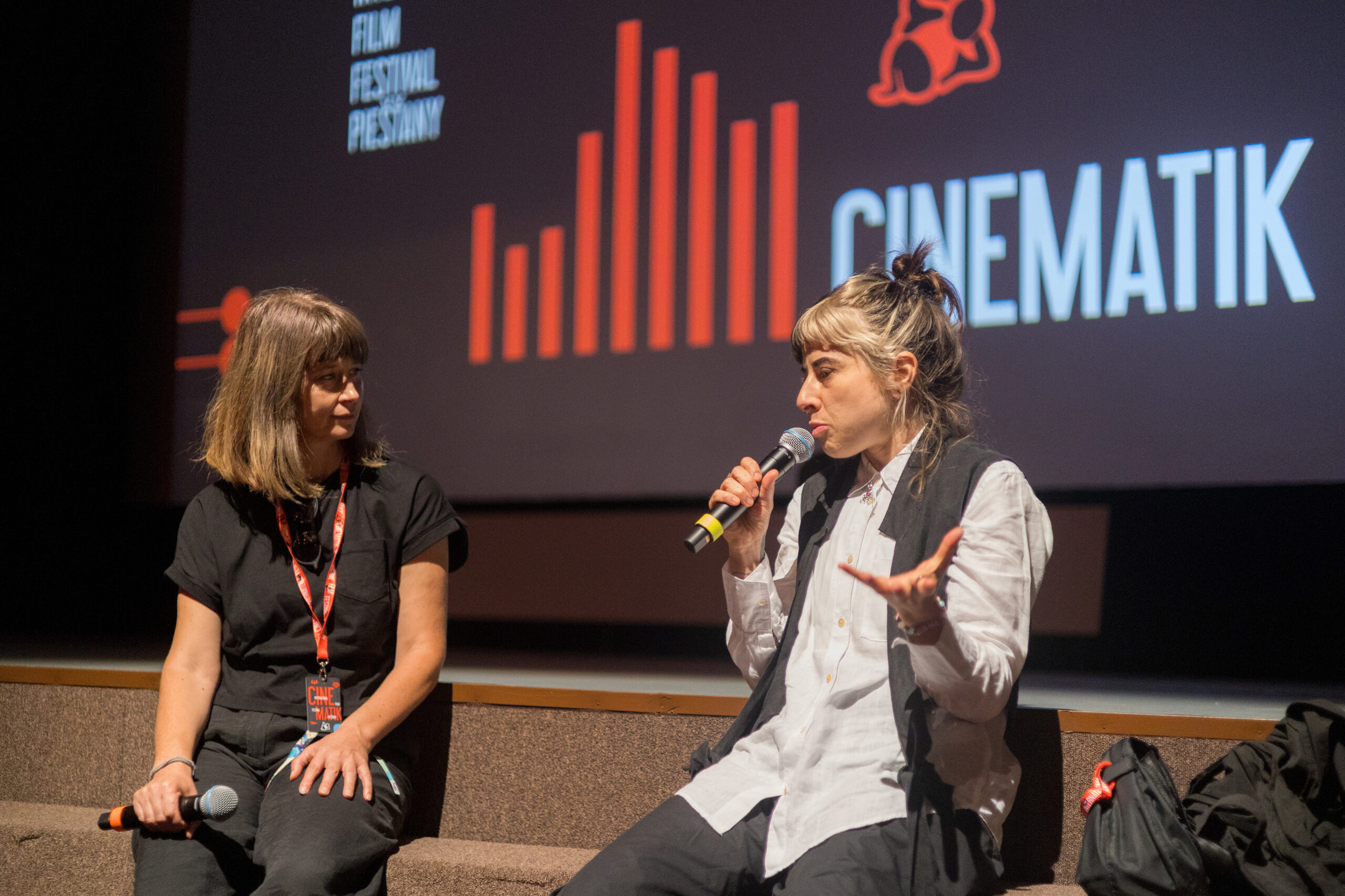
Yesterday at Cinematik, we had the Slovak premiere of the documentary film If Pigeons Turned to Gold, directed by Pepa Lubojacki.
Don't miss out!
11:00 | Fon | Flood
One of the last opportunities to see the Slovak Oscar candidate on the big screen with the personal participation of the director.
12:30 | CL | Attack on Memory: How to rewrite History?
Sandra Polovková from the organisation Post Bellum in a discussion with documentarian Pavol Pekarčík about powerful stories from the Ukrainian front.
16:00 | Ele | Heysel 85
In May 1985, one of the greatest tragedies in the history of football occurred in the European Cup final.
19:30 | Du | Paper Tiger
Two brothers yearn for a better life and believe they have finally found the opportunity to fulfil the American dream. However, the unassuming plan quickly turns into a nightmare.
September 2027 22. Cinematik
We look forward to seeing you again in Piešťany in a year's time!
Tips of the day
La Gradiva

16:30 | Fon | The feature-length debut of French cinematographer and director Marine Atlan observes a group of French teenagers during a school trip to Pompeii. It explores the theme of coming of age and the associated uncertainty, first love, sexuality, but also rejection and the search for identity. The camera quietly observes the characters and lets them exist within the space while tracking what unfolds among the young people. Neither the setting nor the title of the film is accidental; rather, they present a deliberate parallel to the theme of growing up. Gradiva is a female character from a novella by the German writer Wilhelm Jensen, and her name means „she who walks ahead“. In 1907, the novella was analysed from a psychoanalytical perspective by Sigmund Freud, who interpreted the protagonist's obsession with Gradiva as a manifestation of repressed desires and sexuality. The director uses Pompeii as a space where the past intersects with the intense, often chaotic emotions of young people who are leaving childhood behind and do not yet know who they will become.
Mária Nikelová
How to Divorce During the War
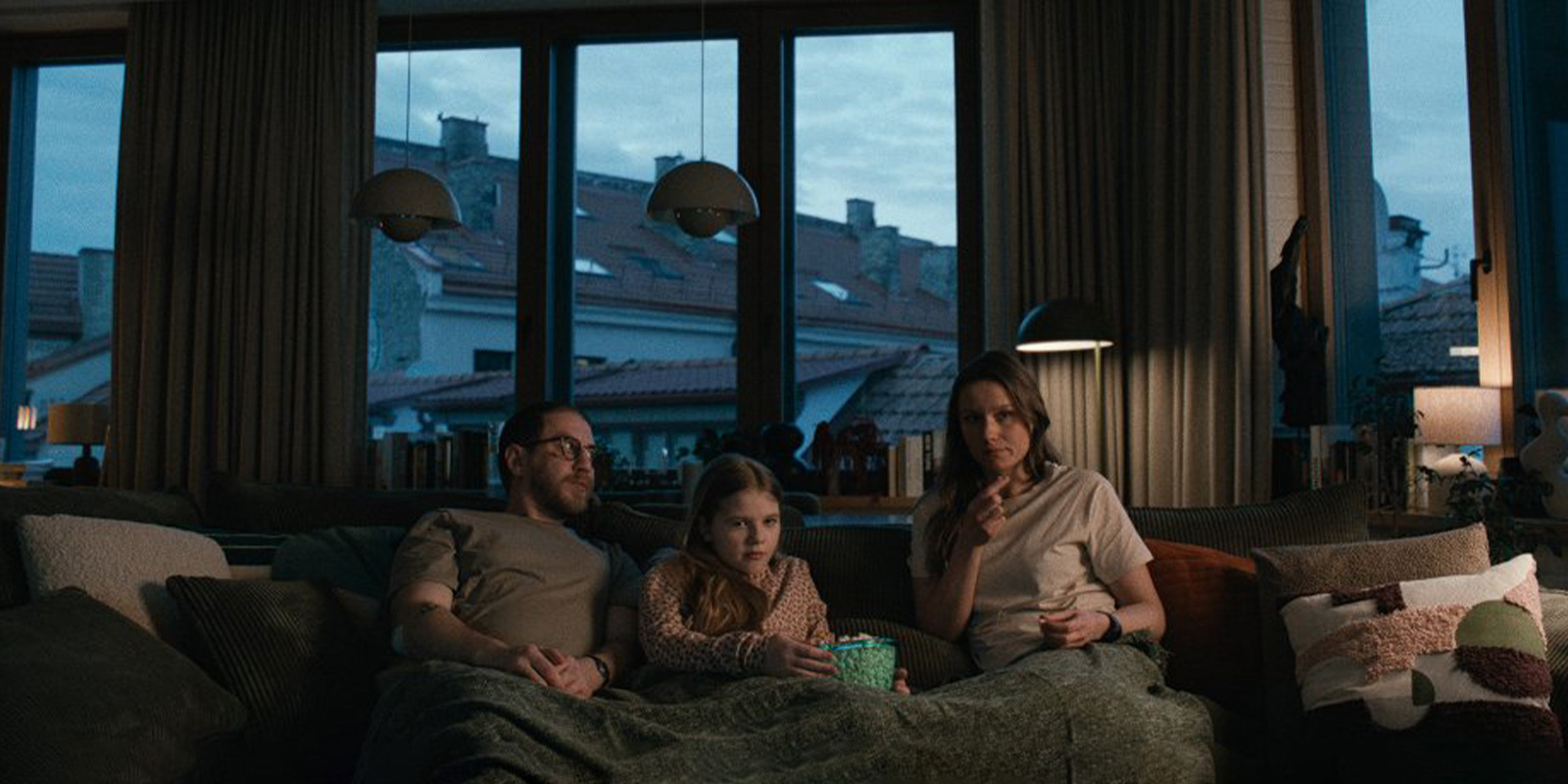
13:30 | Du | Andrius Blaževičius presents a remarkable drama that successfully connects the personal story of a divorce with a major historical trauma. Marija and Vytas decide to end their marriage on the very eve of the Russian invasion of Ukraine. However, war suddenly changes the meaning of their everyday problems and forces them to look at their own relationship from an entirely new perspective. The film's greatest strength is its grounded nature. Blaževičius avoids grand gestures and instead observes how a geopolitical catastrophe stealthily creeps into private life. The contrast between the intimate relationship crisis and the uncertainty of the world around it works brilliantly. Marius Repšys and Žygimantė Elena Jakštaitė create a convincing couple, blending exhaustion, irritation, closeness, and a still-present hope. Moreover, the film manages to infuse a heavy subject with a subtle, absurd humour, preventing it from feeling gloomy or pathetic. How to Divorce During the War It is a sensitive, intelligent and humanly accurate film about how grand history can change our private decisions.
Barbora Gvozdjáková
Papaya
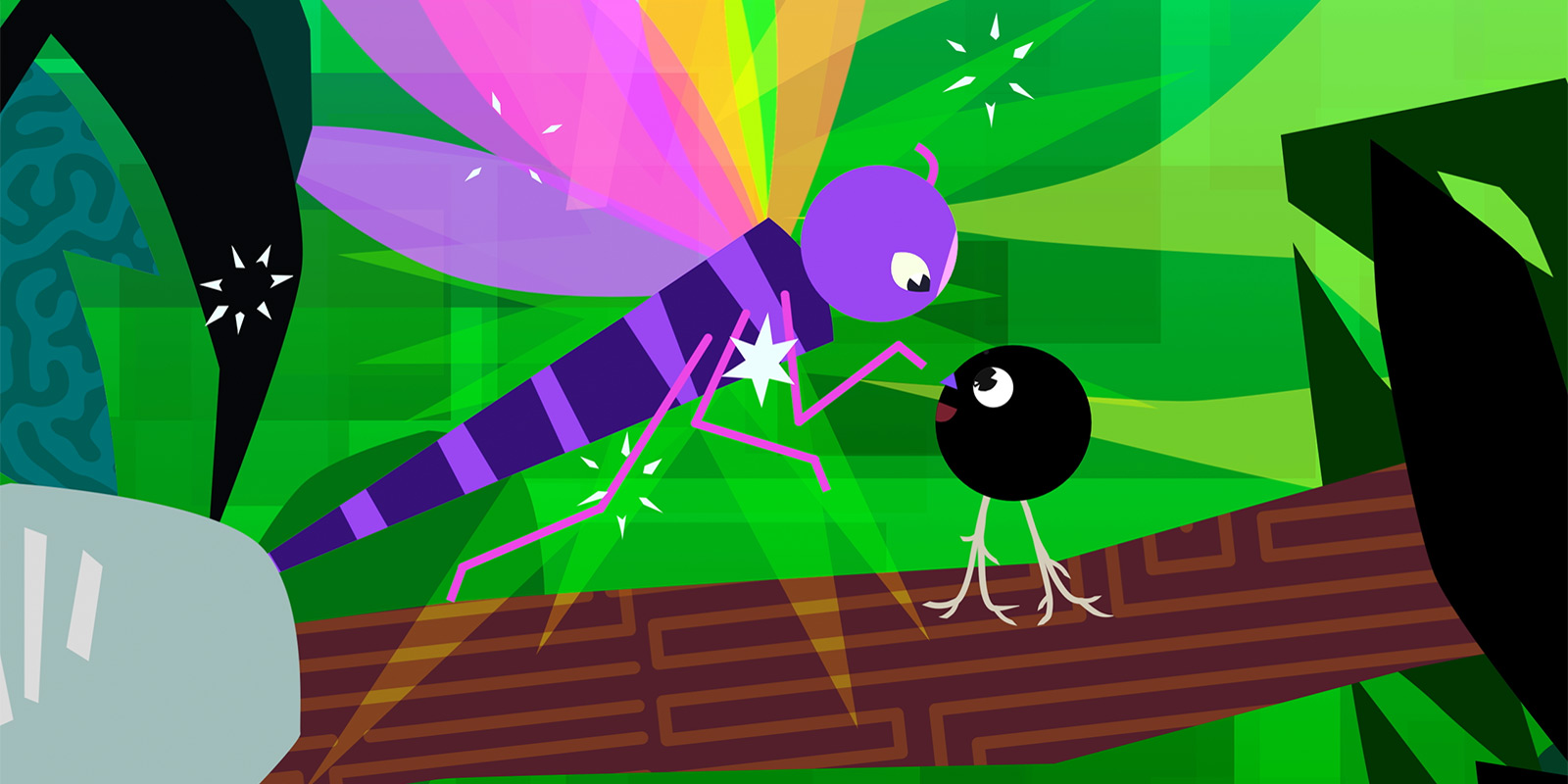
9:00 | Phone | The Brazilian animated film by director Priscilla Kellen follows a little papaya seed that separates from its parent tree. It longs to fly, discover the world and refuses to „put down roots“, so it sets off on a journey through the Amazon rainforest, nature, cities and areas marked by human activity. Only later does it realise that roots do not have to mean restriction; on the contrary, they can become the meaning of life. The film is without dialogue; environmental sounds, music, wind, animals and water are part of the storytelling and the expression of emotion. Visually, minimalist animation full of collage elements predominates, featuring large simple shapes, bold areas of colour and layered forms. Moreover, the plants, assembled almost like paper cut-outs, stem from the perspective of the seed itself. The film employs a simple visual language suitable for child viewers, but equally for adults, who can perceive in it a story about freedom, identity and the need to belong somewhere. At the same time, it addresses ecology and the idea that all living organisms are part of a single system. The film immerses the viewer in a world of colour and sound while subtly leading them to ponder their own place in the world.
Mária Nikelová
Interview
Martin Gonda
It has already been a few days or weeks since it was announced that your film will be Slovakia's submission for the Oscars. How does it feel?
It is a great joy and honour for me. I am delighted that the Rusyn language and a part of Rusyn culture can travel across the ocean through our film and introduce themselves to AMPAS members. At the same time, I see this as recognition of the work of the entire team that worked on the film for several years.
When did you first learn about the story of the Starina dam and the village of Ruské?
Even as a little boy. My family used to go on bicycle trips around Starina. Dad told us there for the first time that in the places where the reservoir is located today, and in its surroundings, seven mostly Rusyn villages once stood and life was thriving there. What captivated me back then was the idea of an oncoming end of the world, even if only in my childish head.
When did the idea to adapt these particular events into a film come about? Why these ones in particular?
I began to toy with the idea of making a feature-film about Starina towards the end of my studies at VŠMU. Since we were shooting our graduation film in the same region too, this subject somehow naturally and organically presented itself. At the same time, what attracted me to it was that it is not merely the story of a single reservoir. It is a story of people who had to leave their homes, of the demise of entire villages, of the loss of identity and of the conflict between a state decision and the lives of real people. I was also interested in what happens to a community when it loses its space, traditions and sense of home. The journey to Flood however, it was much more complicated. Years passed from the initial idea to the script and the actual production, and during development my view of whose story we were actually telling and from what perspective also changed.
Do you see any parallels between the story from the eighties and the present day?
I see a parallel mainly in the conflict between the decisions of those in power and the lives of the people who have to endure them. Even today, people often talk about a „higher interest“, but much less about the specific people who pay for such decisions. I also think the issue of home and identity is current. What happens to a person or a community when they lose the place they have been connected with for generations? Although today we live in a completely different world technologically and socially, interpersonal relationships, generational differences and conflicts between the individual and the system remain ever-present. Emotional and cultural wars also persist, in which it is not just about territory, but also about memory, language and the right to be heard.
Why, in your opinion, is it important to stand up and resist?
It depends on what the resistance is directed against. In the film, it is not a simple division into heroes and villains, but rather about the moment when a person has to decide whether to accept the authority's decision or try to defend their own home and way of life. And when leaving is simply inevitable, as was also the case with Starina, because in those years the whole of eastern Slovakia suffered from a shortage of drinking water, it is up to the individual what they take with them from their old world into the new and what they decide to preserve. Standing up in resistance is important when a person feels that an injustice is taking place. Sometimes resistance is simply refusing to forget, keeping one's language, telling a story, or standing up for someone whom the system cannot protect.
11:00 | Fon | Flood
Profile
Léa Seydoux
Léa Seydoux is among the most prominent French actresses of her generation. She was born on 1 July 1985 in Paris into a prominent French family connected with film and culture. Despite her privileged background, she gradually built her own career and today she is known not only in France, but also on the international film scene. She gained her first notable roles in French films, drawing attention to herself with her ability to portray characters who appear fragile, mysterious and confident all at once. Her career has been significantly influenced by collaborations with directors such as Quentin Tarantino, Ridley Scott and Wes Anderson. She has appeared, for example, in the films Inglourious Basterds, Robin Hood, The Grand Budapest Hotel and Spectre, where she played Madeleine Swann alongside Daniel Craig. The turning point became the film Blue Is the Warmest Colour (2013) by director Abdellatif Kechiche. In it, Seydoux played Emma, a young artist who experiences an intense relationship with the main protagonist. The film won the Palme d'Or at the Cannes Film Festival, and the award was also exceptional in that the jury bestowed it jointly upon the director and both female leads. Seydoux thus gained international recognition and joined the ranks of the most respected European actresses. She is characterised by her ability to move between commercial cinema and challenging arthouse film-making. She has appeared in films such as The Lobster, No Time to Die, Crimes of the Future and Dune: Part Two. It is precisely this diversity that is one of her greatest strengths. Seydoux does not come across as an actress trying to create a single, easily recognisable character type. On the contrary, her filmography shows a willingness to take risks, change genres, and collaborate with prominent directorial personalities. As a result, she has become one of the faces of contemporary European cinema and, at the same time, an actress capable of making her mark in even the largest Hollywood productions.
10:30 | You | Gentle Monster

Profile
Renate Reinsve
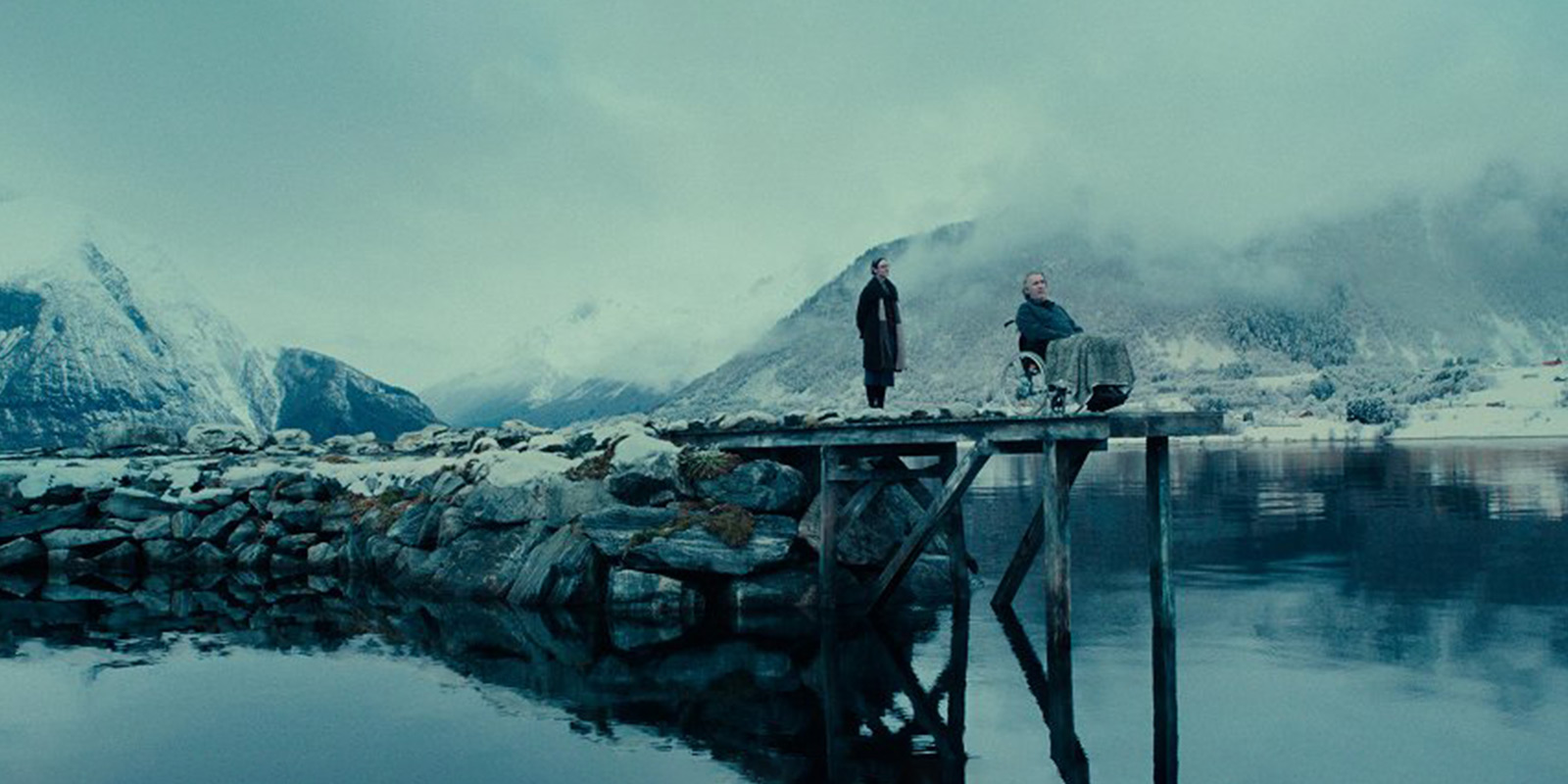
14:00 | Phone | Fjord Some actresses just visit the festival. And then there is Renate Reinsve, who has somehow made Cinematik her own over the years. This September she is returning to the programme with the latest Cannes winner entitled Fjord. To understand why her return is an event, one needs to look back at the recent period. The Norwegian, born in 1987, studied acting in Oslo and spent the first years of her career on the stage – first in Trondheim and then in Oslo. She made her film debut as early as 2011 in Joachim Trier's film Oslo, 31st August, but it was more of a cameo role than a stepping stone. When, ten years later, the same director offered her the lead role in a comedy-drama The Worst Person in the World, Reinsve was seriously considering quitting acting – frustrated by small roles and the feeling that her career was going nowhere. She decided to give film one more chance, which changed her life: the best actress award in Cannes, a BAFTA nomination – and the Slovak premiere right at Cinematik, where the Slovak audience was among the first to notice this actress. Since then, her career has been gathering pace that she could hardly have imagined years ago. Roles followed in the film Another person (2024), in the TV series Presumption of innocence (2024) for Apple TV+, or this year's horror film Backrooms: Beyond the Wall – projects confirming that the initial successes were not a fluke, but merely the beginning. The peak came last year when she teamed up with Joachim Trier once again for the family drama Emotional value. The film took home the Grand Jury Prize from Cannes, and Reinsve earned Oscar, BAFTA, and Golden Globe nominations for it. This made her only the second Norwegian actress in history to be nominated for an Oscar for Best Actress. This title too, starring Reinsve alongside Stellan Skarsgård, had its Slovak premiere right here in Piešťany, at last year's edition of Cinematik. Just a year later, she returns with another major achievement. Fjord, the socio-political drama by Romanian director Cristian Mungiu, took home the Palme d'Or at Cannes this year following a twelve-minute ovation, the second of Mungiu's career. In it, Reinsve alongside Sebastian Stan (their second collaboration after Human nature) portrays a woman torn between her husband's conservative Romanian family and the liberal environment of her own native fjord. The story is inspired by the real-life case of the Bodnariu family, whose children were taken by the state, and asks where tolerance ends and dogma begins. It does so with a sense of urgency, without unnecessary regard for the viewer's comfort – precisely what Cinematik has long based its dramaturgy on. The journey from an insecure actress contemplating the end of her career to a two-time Palme d'Or collaboration with prominent European directors thus unfolds right before the eyes of the Piešťany audience – year after year, film after film.
Matej Ambroš