Festival Daily – Friday
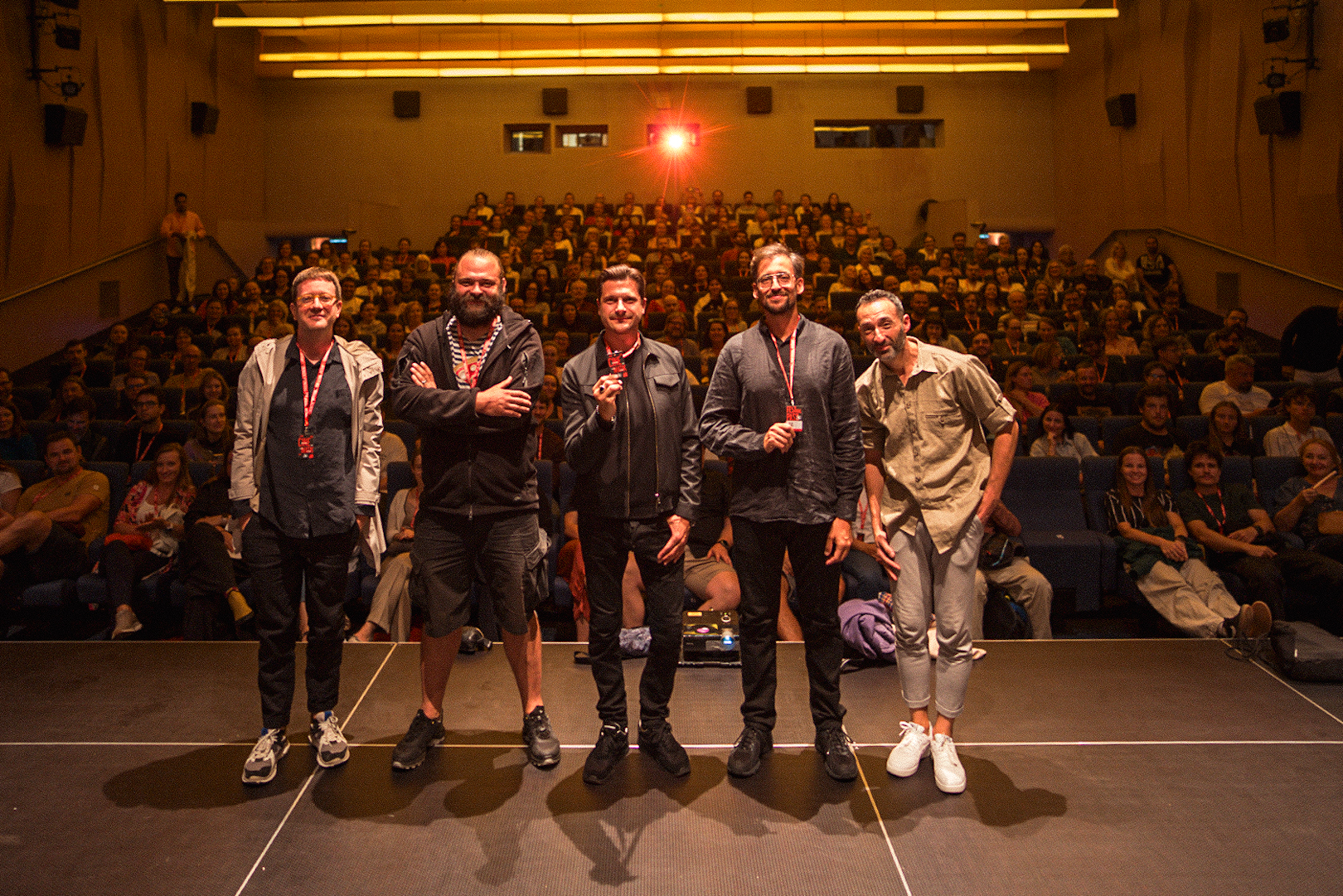
The new Slovak documentary We Must Survive was presented yesterday at a packed Fontána cinema by its director Tomáš Krupa together with his delegation.
Don't miss out!
The feature-length debut by Martina Buchelová, awarded at the Karlovy Vary festival, will be presented in Piešťany by the director in person.
16:30 | Du | Fjord
Romanian director Cristian Mungiu has succeeded with his new film at the Cannes Film Festival. Will he manage to repeat his success at Cinematik?
17:00 | Fon | Life or Film
A film portrait of the notable Slovak director Dušan Hanák.
19:00 | CL | Piatoček: Yes or No
A popular quiz full of bizarre questions coming to Cinematik for the first time.
20:00 | Spa | Budapest 1957
A new historical drama by the director Saul's son on the breakdown of the family and society.
Tips of the day
Becoming Ema
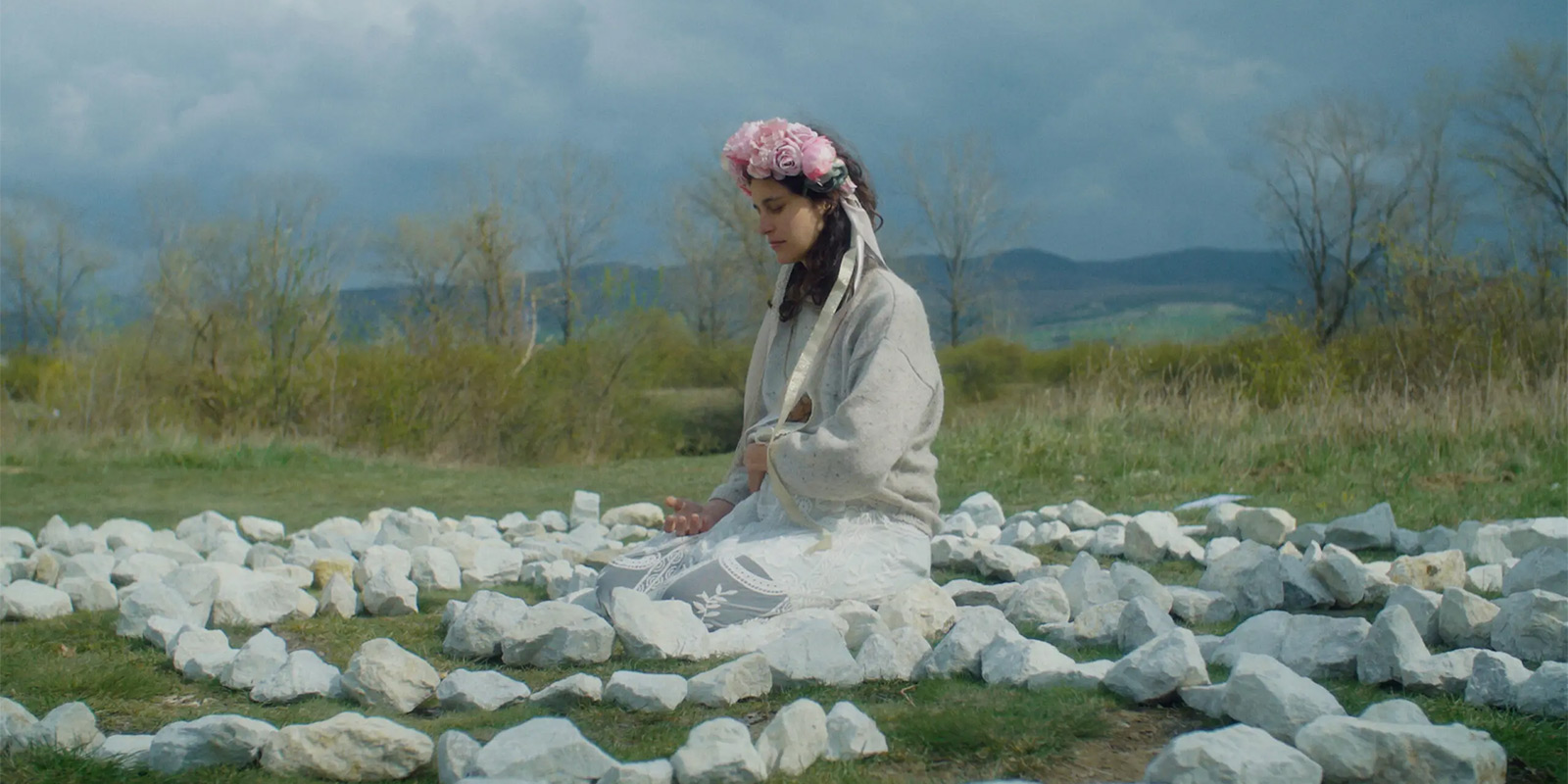
11:00 | Fon | Patricia Drati's documentary Becoming Ema is a sensitive and personal film about the search for identity, one's own place in the world, and the need to understand oneself and one's loved ones. The director does not try to offer simple answers, but creates a space for observation, questions, and the gradual uncovering of her protagonist's inner world. It is precisely in this openness that the greatest strength of the film lies. Drati works with an intimate camera and understated storytelling, thanks to which Becoming Ema It doesn't feel like a classic documentary, but rather like a personal encounter. At the same time, the film is a generational statement about growing up and the difficult process of forming one's own idea of who they want to be. Moreover, the author manages to capture even the small moments of uncertainty, joy, and closeness that give the story its naturalness. Becoming Ema It is remarkable above all for its authenticity and sensitivity. It does not play on big emotions, but precisely because of that it manages to strike a chord. It is an intimate, well-thought-out and human film about how becoming oneself is sometimes the hardest, yet most important journey.
Barbora Gvozdjáková
To Die to Live
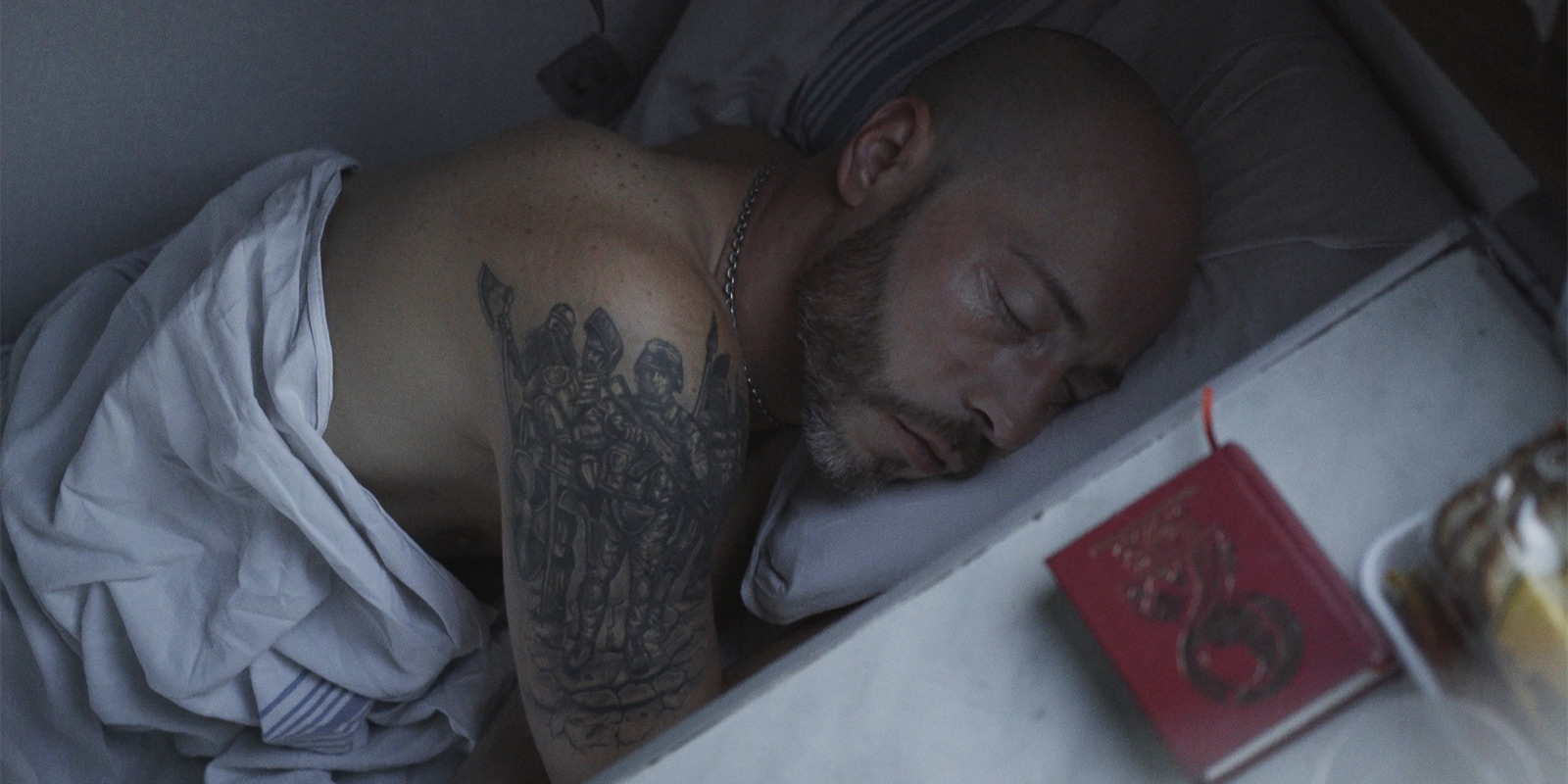
10:30 | Fon | Yuliia Hontaruk in the film To Die to Live it delivers an extremely powerful and personal testimony about people whom the war does not allow to simply return to a normal life. Following their frontline experience in 2014, a trio of veterans attempt to reintegrate into society, but the 2022 Russian invasion forces them to face another test. The director does not rely on grand words or dramatic war imagery. Her strength lies in the close observation of specific human destinies. The camera stays close to the characters, capturing their fatigue, uncertainty, determination and ability to continue despite what they have lived through. War is not portrayed here as a distant political event, but as an experience that permeates everyday life and alters the perception of home, safety and the future. To Die to Live it is an urgent document that does not feel manipulative. Hontaruk lets the stories themselves do the talking, which is precisely why her film is so impactful. It is a painful yet remarkably human testimony to the courage to survive, start over and not lose the will to live.
Barbora Gvozdjáková
Life or Film
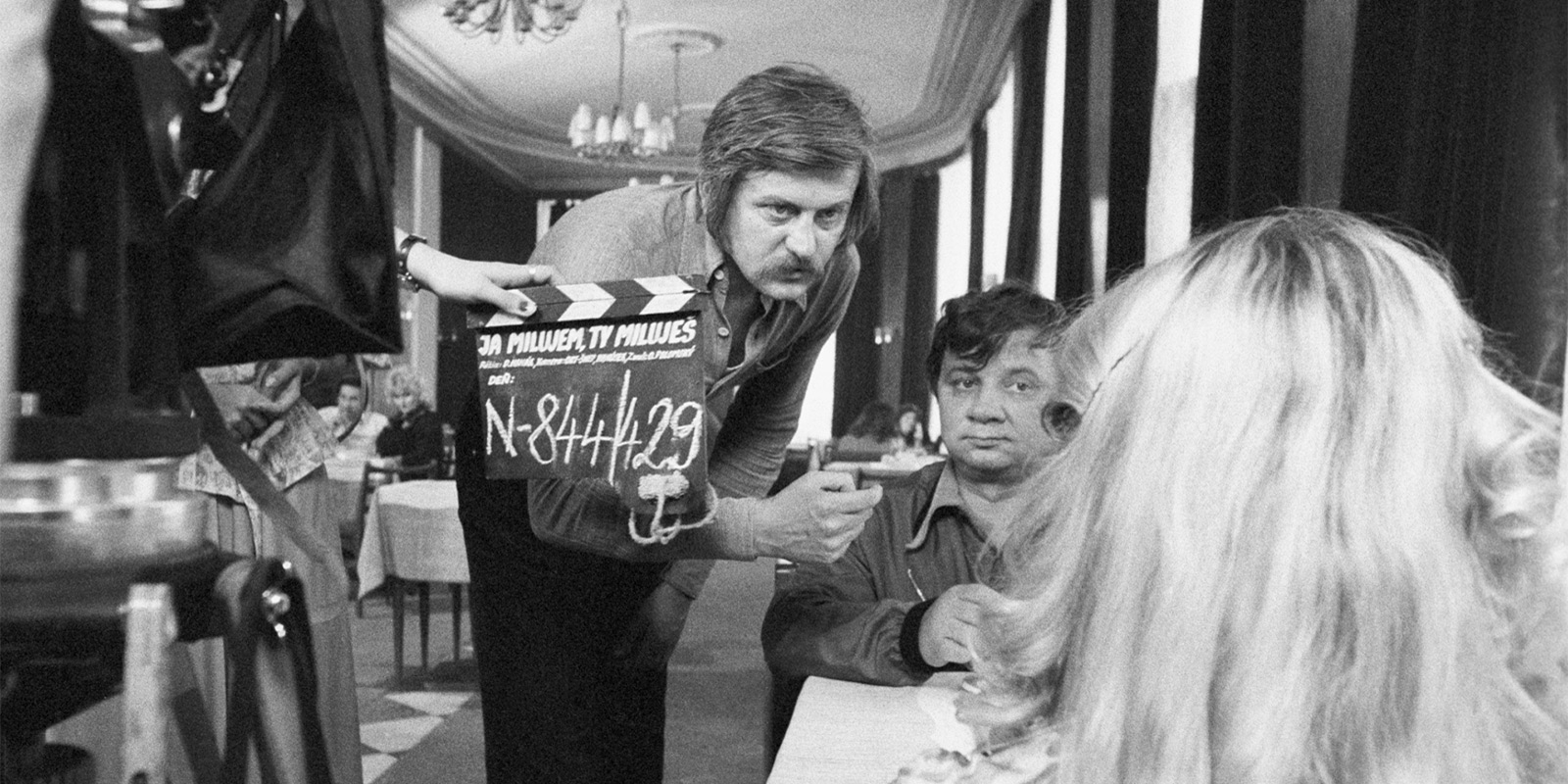
17:00 | Fon The documentary portrait of director Dušan Hanák is composed of interviews, archival materials and contemporary meetings between directors Marek Šulík and Juraj Johanides and the main protagonist. Dušan Hanák thus moves from the role of director to that of participant. It is not a classic biography, but rather a dialogue between the director and himself, an intimate portrait of a man for whom film is closely tied to his personal life and shapes his identity. A doctor's recommendation to stop filming is therefore a profound intervention in his way of life. Hanák ponders the relationship between life and art, creativity, freedom, but also ageing, and looks back at his own work. At the same time, his musical work is given space in the film in the form of guitar improvisations. Hanák's feature films include, for example, Rose-tinted spectacles, or I love, you love. His most significant documentary works include the documentary Images of the Old World from 1972, a portrait of elderly people from Liptov and Orava, which won several awards at home and abroad.
Mária Nikelová
Interview
Martina Buchelová
You premiered the film at the Karlovy Vary Festival, where it also won an award. How do you remember that?
It was very intense; I was really glad that so many people from our creative team met at the festival and that we could all experience the results and feedback on our collaborative work. I was also pleased by the reactions of the perceptive audience. We hadn't expected the viewers to notice and pick up on so many details that we had put into the film. Winning the Proxima competition was an unexpected surprise, and we value the award very much.
When did you first get the idea to bring this particular story to the silver screen?
I think we spoke about this story with the producer Michaela Kaliská in about 2021. Back then we decided that we wanted to make our debut and shoot a feature fiction film and that this story is the one we would choose for our debut.
What stories did you draw inspiration from when writing this particular one?
I don't think I was consciously inspired by any specific characters; rather, it's a tangle of various characters, impressions and situations. When I write down my inspirational notes, I often don't think of anyone specific right away; rather, I have a clear point or a clear emotion that I'm capturing, which shapes the situation for me. So I feel it's more universal. Only later, when there are enough notes, does a specific character form for me from this at some point, but that character is fictional.
Which themes do you like to explore in your work and why?
Playfulness and hope. I feel that life is difficult, while at the same time I feel that a film is just a film, not a manual for living. In my work, I often try to somehow process this contradiction. And at the same time, I try to ensure that the hope or playfulness in these complex situations is authentic and not naïve. I don't feel like I have to solve the meaning of life in my work, yet everyone yearns for some meaning, including my characters. And so I try not to take the whole thing too seriously, but at the same time I don't want to talk rubbish, so I take it very seriously as well. 🙂 I think this feeling and this dissonance are reflected in my work.
Barbora Gvozdjáková
14:00 | Fon | Lover, Not a Fighter

Profile
Adam Driver
Adam Driver (*1983, San Diego) is an American film, television and theatre actor, known for both character portrayals and commercial productions. After high school, he studied at the University of Indianapolis, but following the events of September 11, 2001, he enlisted in the United States Marine Corps. After being injured, he was discharged from service and began pursuing acting. He graduated from the Juilliard School in New York, finishing in 2009. Shortly afterwards, he began performing in the theatre and appeared on Broadway. He gained wider attention thanks to the series Girls (2012 – 2017), in which he portrayed the complicated and emotionally unpredictable Adam Sackler. For this role, he received three consecutive Emmy nominations. At the same time, he built a film career and appeared in films Lincoln, Frances Ha and Inside Llewyn Davis. Fame was brought to him by the role of Kylo Ren in the new Star Wars trilogy, which consisted of the films The force awakens, The Last Jedi and The Rise of Skywalker. However, Driver didn't build his career solely on big franchises. He delivered standout performances in films Paterson Jim Jarmusch's, Silence Martin Scorsese's, BlacKkKlansman Or Spike Lee? Marriage Story By Noah Baumbach. For films BlacKkKlansman and Marriage Story he received two Oscar nominations, the first time for a supporting role and the second time for a leading role. For the film Hungry Hearts he won the Volpi Cup for Best Actor at the Venice Film Festival. On stage he has appeared in productions Look Back in Anger and Burn This, for which he received a Tony Award nomination. He also supports the arts in the armed forces; he founded the organisation Arts in the Armed Forces, which brings theatre to service personnel, veterans and their families. Driver is one of the actors of his generation who is able to combine a physically striking presence with inner vulnerability and create characters with ambiguous psychology.
Barbora Gvozdjáková
22:30 | Du | Paper Tiger
Review
Fatherland
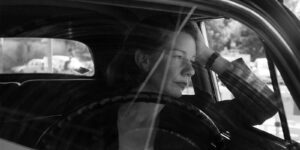
19:30 | Du | Cinematik this year, the screen will welcome two names that made up one of the strongest moments of the last Cannes season – Polish director Paweł Pawlikowski and German actress Sandra Hüller. They are brought together by the film Homeland, for which Pawlikowski won the directing prize in Cannes. Sandra Hüller built her path to an international audience slowly and consistently. She made her debut in the late nineties, but her real breakthrough came with the film Requiem (2006) with a Silver Bear from the Berlinale. Ten years later, the tragicomedy brought her to prominence Toni Erdmann, but 2023 was a breakthrough year for her in the true sense of the word – no fewer than two films featuring her, Anatomy of a Fall and The Zone of Interest, they had their premiere in Cannes and took home the Palme d'Or and the Grand Prix respectively. For the title role of a writer accused of her husband's death in Anatomy of a Fall she won a European Film Award, a César and an Oscar nomination, placing her among just a handful of German actresses with such recognition. The year 2026 brought her another Silver Bear, this time for the film Rose, as well as Hollywood projects alongside Ryan Gosling or Tom Cruise. Paweł Pawlikowski took the opposite path – from documentary filmmaking for the BBC to fiction film and ultimately to the very pinnacle of world cinema. The breakthrough came with the black-and-white drama Ida (2013), the story of a novice nun discovering her Jewish heritage – the first Polish feature film to win the Academy Award for Best Foreign Language Film. Five years later it was followed by Cold War, an intimate love story inspired by the fates of the director's parents. Thanks to it, Pawlikowski became the first Pole to win the directing award at Cannes. His signature style is unmistakable: a sparse black-and-white stylisation, a static camera and characters searching for their own identity amidst historical turning points. Homeland these two worlds are brought together in the third and final instalment of his loose historical trilogy. Set in 1949, it follows the writer Thomas Mann (Hanns Zischler) who, after years of exile in California, returns to a divided Germany to collect two Goethe prizes – one in Frankfurt, the other in Weimar. On this journey, he is accompanied by his daughter Erika, played by Sandra Hüller. The journey gradually turns into a painful confrontation with the wreckage of both his own family and the country. The film premiered once again in Cannes, and critics received it as another deeply human high point of Pawlikowski's work. Thus, Piešťany is this year welcoming not only one of the most prominent European directors of today, but also an actress without a single misstep in recent years – and their joint work deserves a place at the top of this year's film list.
Matej Ambroš